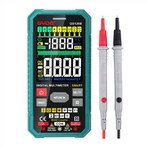
What does the internal structure of a gas detector contain?、
Gas detectors are widely used in a variety of fields such as industry, environmental monitoring, safety testing, and fire protection. When using a gas detector, you need to operate it in strict accordance with the equipment manual and carry out regular calibration and maintenance to ensure its accuracy and reliability. So what does the internal structure of a gas detector usually include?
It includes the following components:
1. Sensor: The sensor is the most important part of a gas detector and is used to detect and measure the concentration of a specific gas. Different types of gas detectors may use different types of sensors, such as electrochemical sensors, optical sensors or semiconductor sensors.
2. Control circuit board: The control circuit board is the core part of the gas detector, responsible for processing the signals generated by the sensors and carrying out data processing and conversion. It usually includes microprocessor, analog-to-digital converter, signal amplifier and other components.
3. Power supply module: The power supply module provides electrical power to the various components of the gas detector. It can include batteries, chargers or external power interfaces.
4. Display: The display is used to show the measurement results and other related information, such as gas concentration values, alarm status, operation interface, etc. The display is usually a liquid crystal display (LCD). The display is usually a liquid crystal display (LCD) or LED display.
5. Alarm: The alarm is used to send out an alarm signal, when the gas concentration exceeds the preset threshold, it will trigger the sound, light flashing or vibration and other alarm methods to remind the user of the existence of potential danger.
6. Pushbuttons and controllers: Pushbuttons and controllers are used for user interaction with the gas detector, such as adjusting settings, selecting functions, etc. They are usually located on the outside of the detector or on the inside. They are usually located on the outside of the detector or on the operator panel.
7 . Enclosure: The enclosure is the external structure that protects and wraps the internal components of the gas detector. It is usually made of wear-resistant and corrosion-resistant materials to ensure the durability and protection of the device.
8. Other Auxiliary Components: Depending on the specific model and functional requirements, the gas detector may also include other auxiliary components, such as data storage modules, communication interfaces, charging circuits, temperature compensation components and so on.
It should be noted that different types and brands of gas detectors may differ in their internal structure and components. Therefore, when using and maintaining a gas detector, you should refer to the instruction manual and related documentation of the device to understand its specific internal structure and operation.