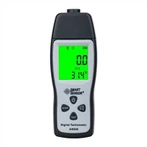
What is a gas detector, what are its advantages and uses
As is well known, gas detectors are instruments used to detect changes in the concentration of harmful gases at work sites. However, in industrial and commercial settings with a wide variety of complex gas types, a single gas detector cannot meet the gas detection requirements of such locations, resulting in the emergence of composite gas detectors.
Firstly, it should be noted that depending on the usage method, there are fixed composite gas detectors and portable composite gas detectors. Fixed gas detectors are installed on the testing site to detect gases within their measurement range 24 hours a day. The staff carry portable gas detectors to detect the area to be tested in real-time. These two types of detectors each have their own advantages and uses, let's carefully study them.
Let's first talk about fixed gas detectors.
The biggest advantage of a fixed gas detector is uninterrupted measurement 24 hours a day. As long as it is powered on, the instrument is in normal detection mode.
Let's first talk about portable composite gas detectors. Portable gas detectors are commonly used in enclosed spaces and confined spaces, but the gas environment in these spaces is often very complex, leading to situations such as hypoxia and high concentrations of harmful gases. If a portable gas detector is carried with each gas detection, it will definitely affect the work efficiency of on-site workers, so portable composite gas detectors have emerged. The composite gas detector mentioned below refers to a portable composite gas detector.
A very important application of composite gas detectors is to detect gas concentration. It can be used with an opening to detect gases in the environment to be tested in real-time, effectively, and quickly, and display the detected gas concentration on the instrument's display screen, making it convenient for staff to check in a timely manner. Moreover, it also has a vibration alarm function, which can serve as the third guarantee for the instrument.
In addition to detecting, the composite gas detector also adjusts the on-site staff's demand for an instrument, making it convenient for staff to carry and improving their work efficiency.
And the composite gas detector has a great function, which is to notify and remind. In some large and complex limited spaces, the working environment can be said to be constantly changing. Once the concentration of harmful gases in the work environment changes, the composite gas detector worn by the staff will emit bright sound and light alarm signals, flashing lights, and buzzer alarm sounds, which can remind colleagues to take preventive measures in a timely manner, let them know each other's positions and distances, and also notify workers in the surrounding limited space in a timely manner.
In summary, the use of composite gas detectors is roughly as follows. In fact, in Bian Xiao's view, composite gas detectors are not only safety detection instruments, but also "life-saving signs" for on-site workers. When we use this lifebuoy, we must pay attention to its maintenance. Only when the composite gas detector receives appropriate maintenance and upkeep can it work more stably.