What is the difference between a fully automatic scanning electron microscope and an optical microscope
1. Different definitions:
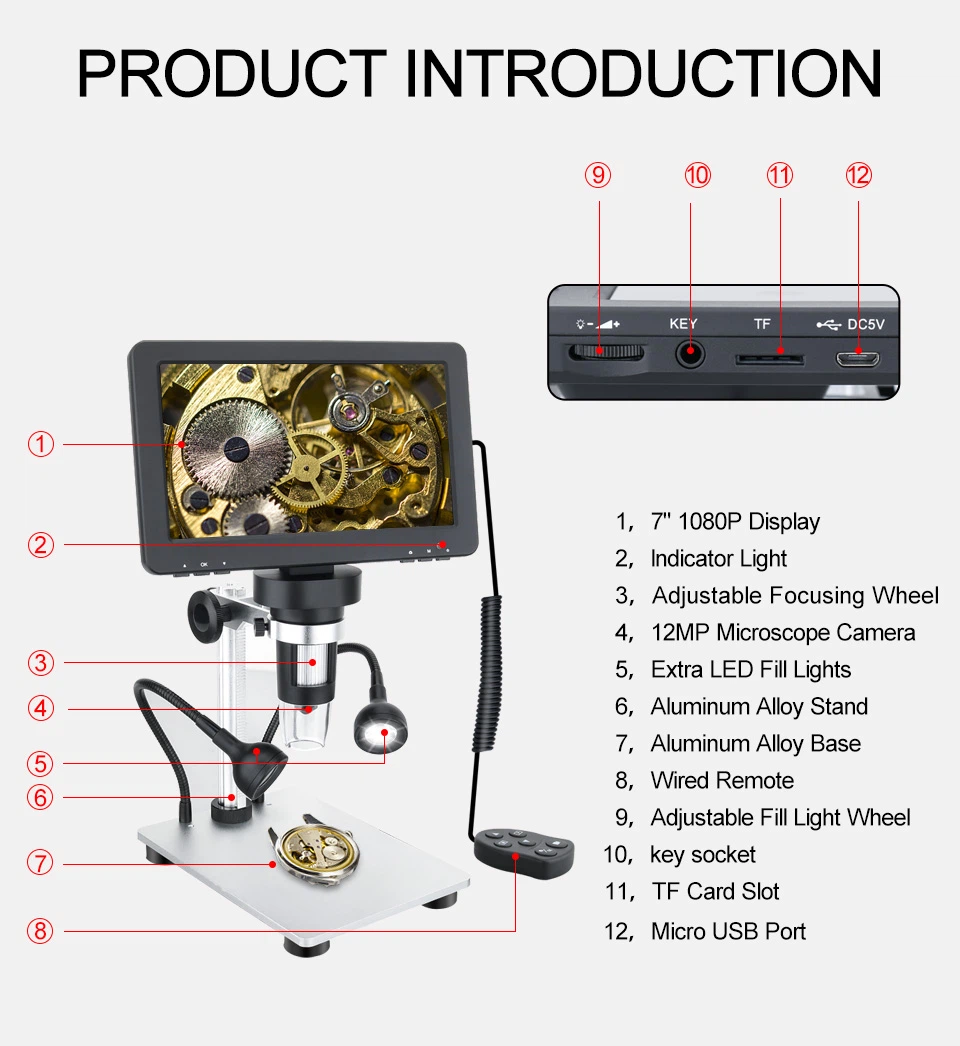
An optical microscope is an optical instrument that uses optical principles to magnify and image tiny objects that cannot be distinguished by the human eye, so that people can extract microstructure information.
The application of fully automatic scanning electron microscope technology is based on the optical microscope, the resolution of the optical microscope is 0.2μm, and the resolution of the transmission electron microscope is 0.2nm, that is to say, the transmission electron microscope is based on the optical microscope. Magnified 1000 times.
2. Different categories:
There are many classification methods for optical microscopes. According to the number of eyepieces used, they can be divided into trinocular, binocular and monocular microscopes; according to whether the image has a stereoscopic effect, they can be divided into stereoscopic vision and non-stereoscopic vision microscopes; according to the object of observation, they can be divided into Biological and metallographic microscopes, etc.; according to the optical principle, it can be divided into polarized light, phase contrast and differential interference contrast microscopes, etc.
Fully automatic scanning electron microscopes can be divided into transmission electron microscopes, scanning electron microscopes, reflection electron microscopes and emission electron microscopes according to their structures and uses.
3. The composition structure is different:
The optical system of the microscope mainly includes four parts: objective lens, eyepiece, mirror and condenser. In a broad sense, it also includes lighting sources, filters, coverslips and slides.
The automatic scanning electron microscope consists of three parts: lens barrel, vacuum device and power supply cabinet.
Compared with optical microscope and transmission electron microscope, scanning electron microscope has the following characteristics:
1. It can directly observe the structure of the sample surface, and the size of the sample can be as large as 120mm×80mm×50mm.
2. The sample preparation process is simple and does not need to be cut into thin slices.
3. The sample can be translated and rotated in three dimensions in the sample chamber, so the sample can be observed from various angles.
4. The depth of field is large, and the image is full of three-dimensionality. The depth of field of the scanning electron microscope is hundreds of times larger than that of the optical microscope and dozens of times larger than that of the transmission electron microscope.
5. The magnification range of the image is wide and the resolution is relatively high. It can be magnified ten times to hundreds of thousands of times, and it basically includes the magnification range from magnifying glass, optical microscope to transmission electron microscope. The resolution is between optical microscope and transmission electron microscope, up to 3nm.
6. Electron beams have less damage and pollution to samples.
7. While observing the morphology, other signals from the sample can also be used to analyze the composition of the micro-area.