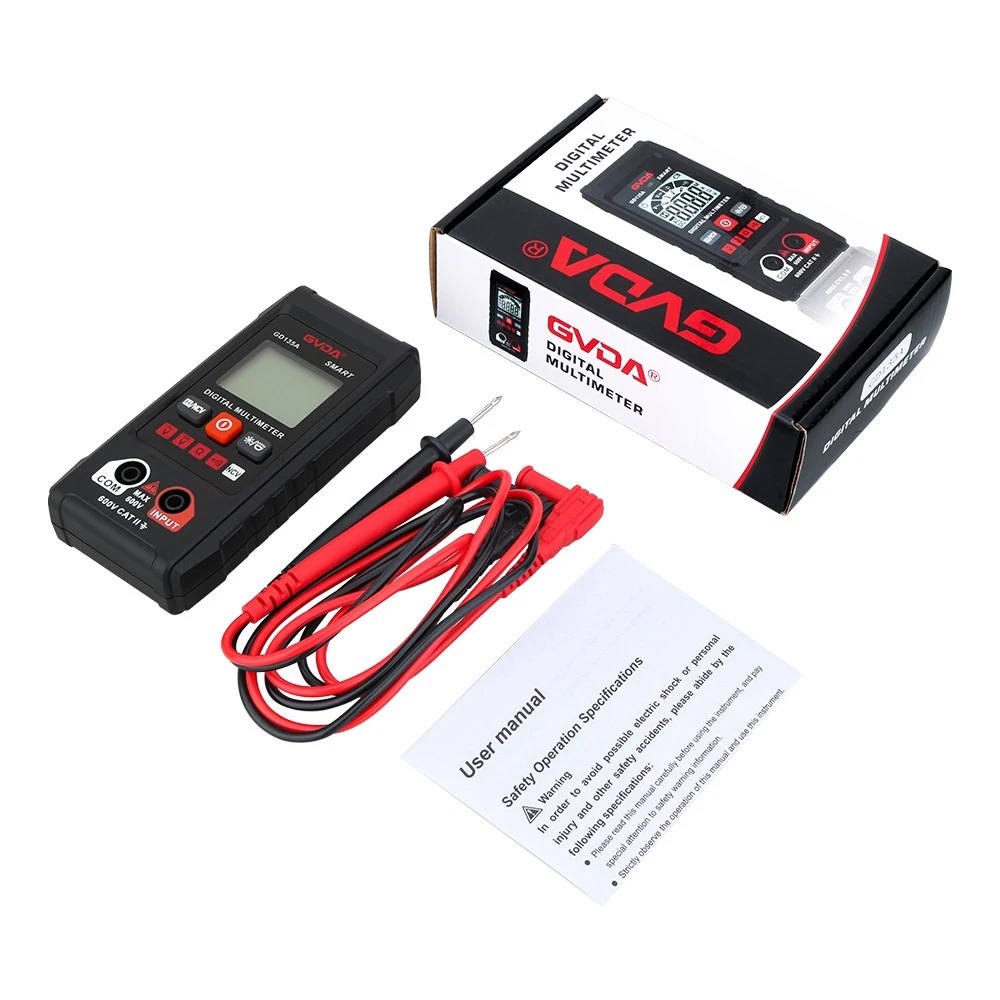
What is the RMS and True RMS of a multimeter?
The size of the alternating current is changing with time, the instantaneous value (a moment) of the size of the change between zero and positive and negative peaks, the maximum value is only an instantaneous value, which does not reflect the ability of the alternating current to do work.
So they introduced the concept of effective value, which is defined as:
RMS: defined by the heat (power), an alternating current through the resistor to produce heat and another DC through the resistor, if the heat generated in the same time is equal, then the DC voltage value of the alternating current voltage of the effective value.
True RMS: the definition of the effective value is defined by the heat to define, but in the measurement instrument according to this method to the effective value of the voltage measurement is very difficult to realize, so most of the voltage measurement instruments, such as multimeter to measure the voltage, the measurement method is not according to the effective value of the definition of the "heat" to carry out measurements, one class of multimeters to the Sine wave as a reference, through the peak of the sine wave for the root of two times the effective value of the relationship between the effective value to get (or through the average value to derive), this kind of method to get the effective value of the sinusoidal shape of the class of AC voltages is only correct, for other shapes of waveforms will produce bias. Another type of multimeter voltage value is the DC component, the fundamental waveform and the high harmonics of the RMS squared, this value is similar to the definition of the RMS value, the shape of the waveform is not required, in order to distinguish between this type of RMS value and the RMS value through the sinusoidal waveform instrumentation, in the measurement of instrumentation in the popular called the "true RMS value".
Root Mean Square (RMS): Another name for the RMS value (which should be the true RMS value on the measuring instrument).
RMS value of the multimeter usually refers to one of the following three cases:
1, calibrated average value method, calibrated average value is also known as the corrected average value, or calibrated to the effective value of the rectified average value, the principle is to rectify and integrate the circuit, the AC signal into a DC signal, and then according to the characteristics of the sine wave, multiplied by a coefficient, for the sinusoidal wave, multiplied by the coefficient, the result is equal to the effective value of the sinusoidal wave. Therefore, this method is limited to sine wave testing.
2, peak detection method, through the peak detection circuit, to obtain the peak value of the AC signal, and then according to the characteristics of the sine wave, multiplied by a coefficient, for the sine wave, multiplied by the coefficient, the result is equal to the effective value of the sine wave. Therefore, this method is limited to sine wave testing.
3、True RMS method, the use of true RMS circuit, the AC signal into DC signal and then measured. This method is applicable to the true RMS test of arbitrary waveforms.
Most multimeters use the first two methods. And there is a large limitation on the frequency of the signal.
For alternating current, its voltage is a changing waveform, usually we describe its voltage value refers to its rms value, such as what we call 220V power supply, its peak voltage of more than three hundred and ten volts, peak-to-peak value for the peak value of two times for more than six hundred volts.
Sinusoidal alternating current electromotive force, voltage, the effective value of the current to E, U, I, respectively. Often referred to as alternating current electromotive force, voltage, current size are value of its effective value. Alternating current electrical equipment marked on the rated value and alternating current instrumentation to indicate the value are also effective.