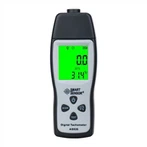
What is the role of the fruit sugar content non-destructive testing instrument, and its working principle analysis
The sweetness of fruit is an important criterion for judging fruit, and it is also the feeling that people can experience when using fruit. Therefore, it is necessary to ensure that every fruit used by consumers has sufficient sweetness, so the method is before entering the market. The sweetness of these fruits is tested and marked. In the past, people used to judge the sweetness of fruits, and they could only rely on experience or sensory perception to know whether the fruit was sweet or sour.
However, it is difficult to tell consumers how sweet or sour it is, and now the laboratory uses a professional instrument such as fruit non-destructive testing instrument for testing, which is much more objective than purely subjective feelings. With the measurement of the non-destructive testing instrument for sugar content of agricultural fruits, we can determine the sugar content of the fruit, so that we can directly tell consumers how sweet the fruit is and how sweet it is.
my country is the world's largest fruit producer, and the number of employees and orchard planting area ranks first in the world. However, how to improve fruit quality, increase fruit prices and sales is still a problem faced by many fruit farmers. With the advent of smart agriculture, the The new model of Internet + modern agriculture and the application of advanced agricultural instruments in the traditional fruit industry have significantly improved the quality and industrialization of fruit products.
According to research, there is a quantitative relationship between fruit sugar acidity and near-infrared absorption spectrum. According to the distribution intensity of fruit near-infrared absorption spectrum, fruit acidity is calculated by mathematical model.
The fruit sugar content non-destructive tester is designed according to this working principle. When the fruit quality is identified, the user does not need to cut the fruit, but directly touches the probe on the surface of the fruit to be tested, and can easily measure the sweetness of the fruit. Acidity.