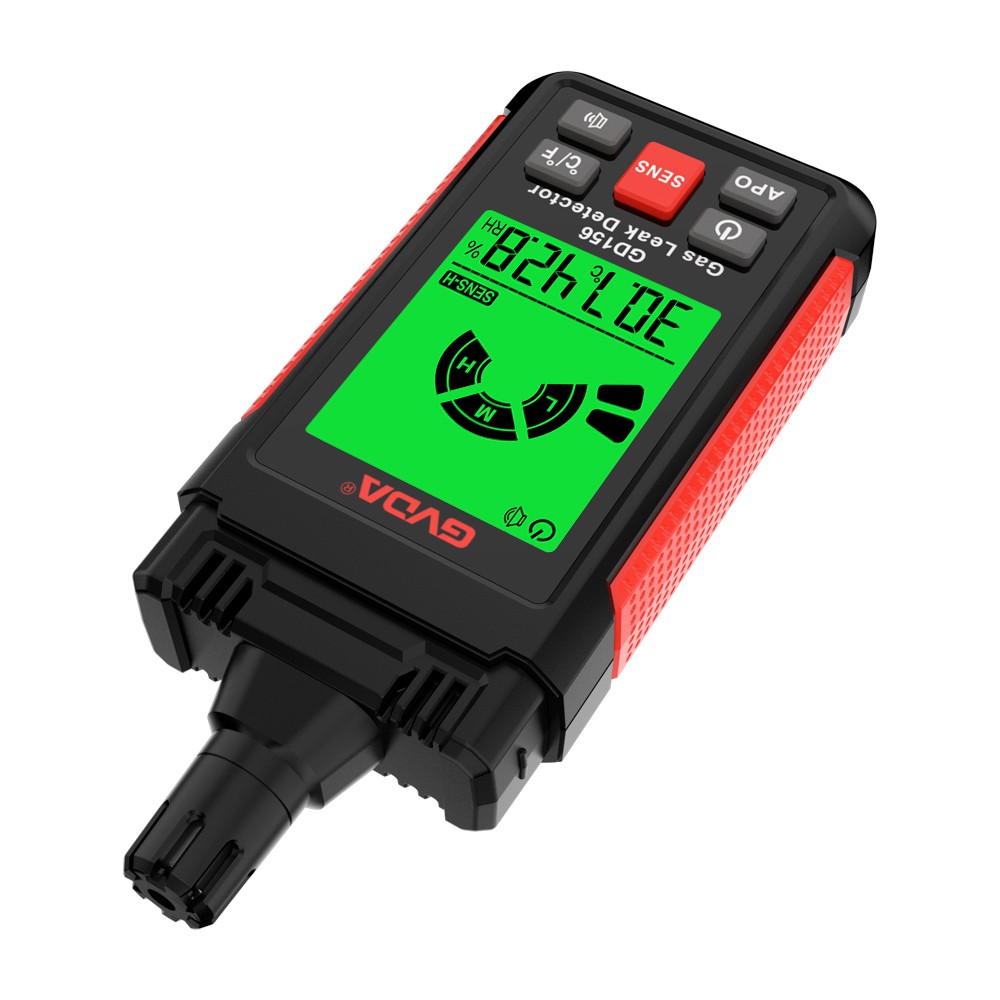
What is the standard range of gas detection for general combustible gas alarms?
What does the measurement range of flammable gas alarm gas 0-100%LEL mean?
"LEL" refers to the lower explosion limit, which is a technical term for combustible gases. The lowest concentration of combustible gas in the air when it encounters an open fire is called the lower explosion limit - referred to as "LEL". English: Lower
When the concentration of combustible gas in the air reaches its lower explosion limit, we call the explosion hazard of combustible gas environment in this place 100%, that is, 100%LEL. If the combustible gas content only reaches 10% of its lower explosion limit, we call the explosion hazard of combustible gas in this place at this time 10% LEL; the monitoring of combustible gas in the ambient air often directly gives the environmental hazard of combustible gas. degree, that is, the percentage of the content of the combustible gas in the air and its lower explosion limit: [%LEL]; therefore, this kind of monitoring is sometimes called "explosion detection", and the monitoring equipment used is also called "explosion detection instrument" .
What is the standard range of gas detection for general combustible gas alarms?
The specific indicators are as follows:
1. If you use an explosion detector, the explosion limit is the general term for the lower explosion limit and the upper explosion limit. The concentration of combustible gas in the air will only explode when the concentration of the combustible gas is between the lower explosion limit and the upper explosion limit. No explosion will occur below the lower explosion limit or above the upper explosion limit. Therefore, when carrying out explosion measurement, the alarm concentration of the combustible gas alarm is generally set below 25% LEL of the lower explosion limit.
2. Therefore, the combustible gas concentration of the measured object is ≤ 25% of the lower explosion limit
(volume ratio, the same below). (Note: It can be understood that when performing explosion measurement, the alarm concentration of the combustible gas detector is generally set below 25% LEL of the lower explosion limit.)
3. If other chemical analysis methods are used, when the lower explosion limit of the measured gas or vapor is ≥10%, its concentration should be less than 1%; when the lower explosion limit is less than 10% or ≥4%, the concentration should be less than 0.5% %; when the lower explosion limit is less than 4% and ≥1%, the concentration of the combustible gas alarm should be less than 0.2%. If there are two or more mixed combustible gases, the one with the lower lower explosion limit shall prevail.
4. Secondly, simply put, the lowest content of combustible gas that can cause an explosion is called the lower explosion limit Low Explosion - Level (LEL).
5.LEL is not a unit, it refers to a value, generally refers to the volume ratio of explosive gas in the air.
The value of LEL is not detected by the instrument, it is a different value for different gases in the national standard. The data displayed on the combustible gas alarm meter only shows the concentration of combustible gas in the air for alarm. Generally, the quantitative analysis instrument is marked with what gas is detected. If it is a qualitative analysis instrument, it cannot show what kind of gas it is.