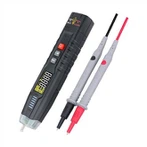
What issues should we pay attention to when choosing and using a gas detector?
In some places where gas is often generated, uncertain factors may cause danger, so gas detection needs to be carried out at all times. So do you know what aspects should be paid attention to when choosing a gas detector? It is necessary to pay attention to routine calibration and testing, the main detection interference of different gases on the sensor, the life of the sensor and the concentration range of the gas detector.
How to correctly choose a gas detector? We need to know some necessary information, including our own needs, the working conditions of the use environment (temperature, humidity, air pressure, impurities, etc.), on-site safety conditions, functional requirements for use, and the origin of the sensor, then when choosing a gas detector What should we pay attention to?
1. Pay attention to routine calibration and testing, and use the relative comparison method to measure and evaluate toxic and harmful gas detectors. First, calibrate the gas detector with zero gas and standard concentration gas, obtain the standard curve and store it in the device.
The gas detector compares the electrical signal formed by the change in target gas concentration with the standard curve concentration to calculate the accurate gas concentration value. Therefore, the gas detector must be calibrated before using the gas detector and after replacing the sensor. To ensure that the gas detector performs its normal detection function during use;
2. The main detection interference of different gases on the sensor. Generally speaking, each sensor can only correspond to a specific gas, but any gas detector cannot be absolutely special. The detection of other gases on the sensor should be understood as much as possible. interference to ensure its accurate detection of target gases;
3. Pay attention to the life of the sensor. Generally speaking, portable gas detectors equipped with LEL sensors have a longer life, up to about three years, and some can reach four years or more. The life of an electrochemical sensor for a gas is relatively long. Short, generally up to one to two years; (the impact of the working environment on the life of the gas sensor needs to be considered)
4. Pay attention to the concentration range of the gas detector. When a gas is detected, its accuracy can only be guaranteed within its measurement range. If the measurement range is exceeded for a long time, it will cause fatal damage to the sensor and greatly shorten the service life of the sensor. , Long-term working at high concentrations will also cause damage to toxic and harmful gas detectors.
5. You need to pay attention to your own monitoring needs, whether you need a fixed gas detector or a portable gas detector, and consider the working conditions of the site to consider whether you need to use a pretreatment system.