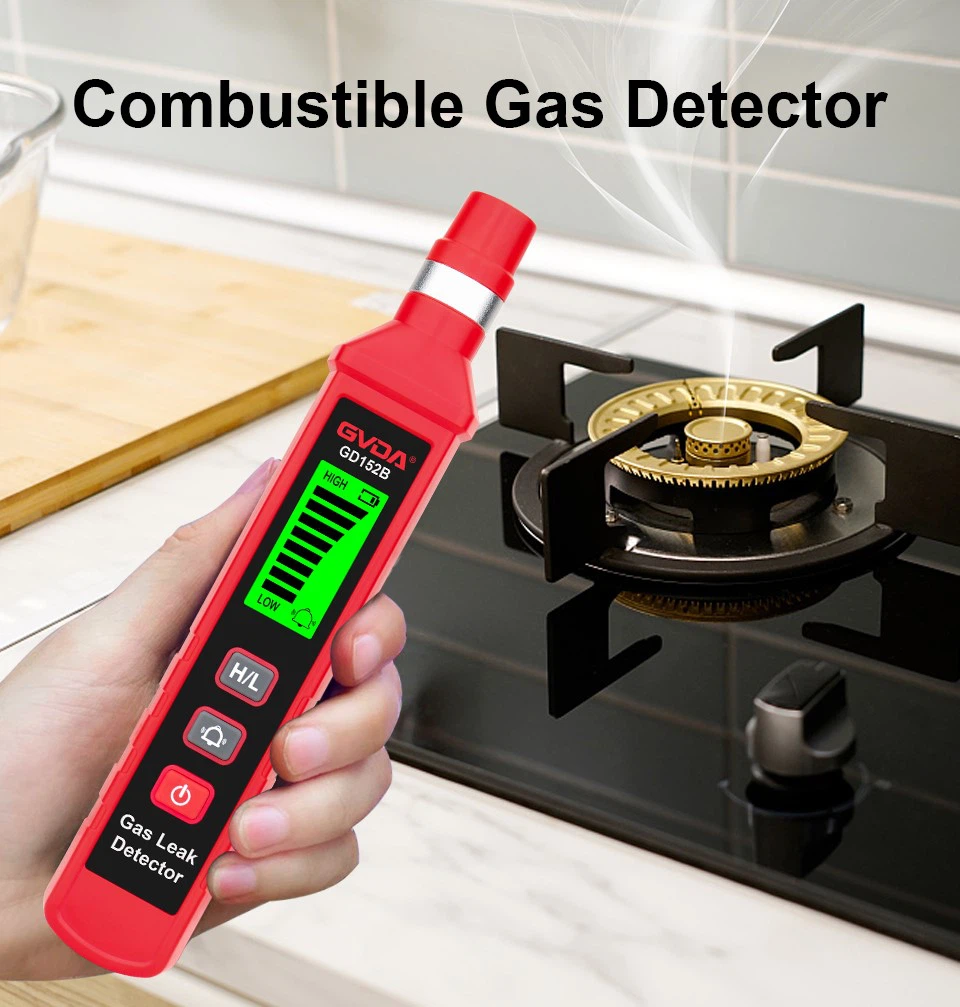
What key considerations are there for installation position selection when installing a combustible gas detector?
1. Select installation height based on gas density
(1) Gases with a density greater than air (such as liquefied petroleum gas):
The combustible gas detector should be installed within a height range of about 0.3-0.6 meters from the ground to detect the accumulation of leaked gas near the ground in a timely manner. In the storage tank area, detectors should be installed around the storage tank, with a distance of no more than 0.6 meters from the bottom of the tank.
(2) Gases with a density lower than air (such as natural gas):
It should be installed 1-1.5 meters above the possible leakage point or on a wall near the ceiling.
2. Approach potential sources of leakage
Combustible gas detectors should be installed near possible leakage sources, such as pipeline connections, valves, flanges, storage tanks, etc., generally not more than 1 meter away from the leakage source. In industrial settings, detectors should be installed around equipment, especially near the inlet and outlet pipelines of the equipment.
3. Avoid interference sources
Stay away from strong electromagnetic interference sources such as large motors, transformers, etc. to reduce interference with detection components. Avoid high temperature and high humidity environments: prevent the sensor performance of combustible gas detectors from being affected by environmental conditions.
4. Consider ventilation and diffusion direction
In well ventilated areas, the direction of gas diffusion should be considered, and combustible gas detectors should be installed on the path where gas may diffuse.
5. Installation suggestions for different locations
(1) Industrial premises:
A combustible gas detector should be installed every 50-100 square meters in the workshop, and a three-dimensional monitoring network should be formed in the storage tank area.
(2) Commercial premises:
The catering kitchen should be installed near the gas pipeline, gas stove, and gas water heater, and the combustible gas detector at the gas station should be installed at the bottom of the gas machine and in the oil storage tank area.
6. Inspection and maintenance after installation
After installation, the combustible gas detector should be inspected to ensure that it can work properly, and regular maintenance and calibration should be carried out.