What should be the first thing to do when reading the microscope to the light?
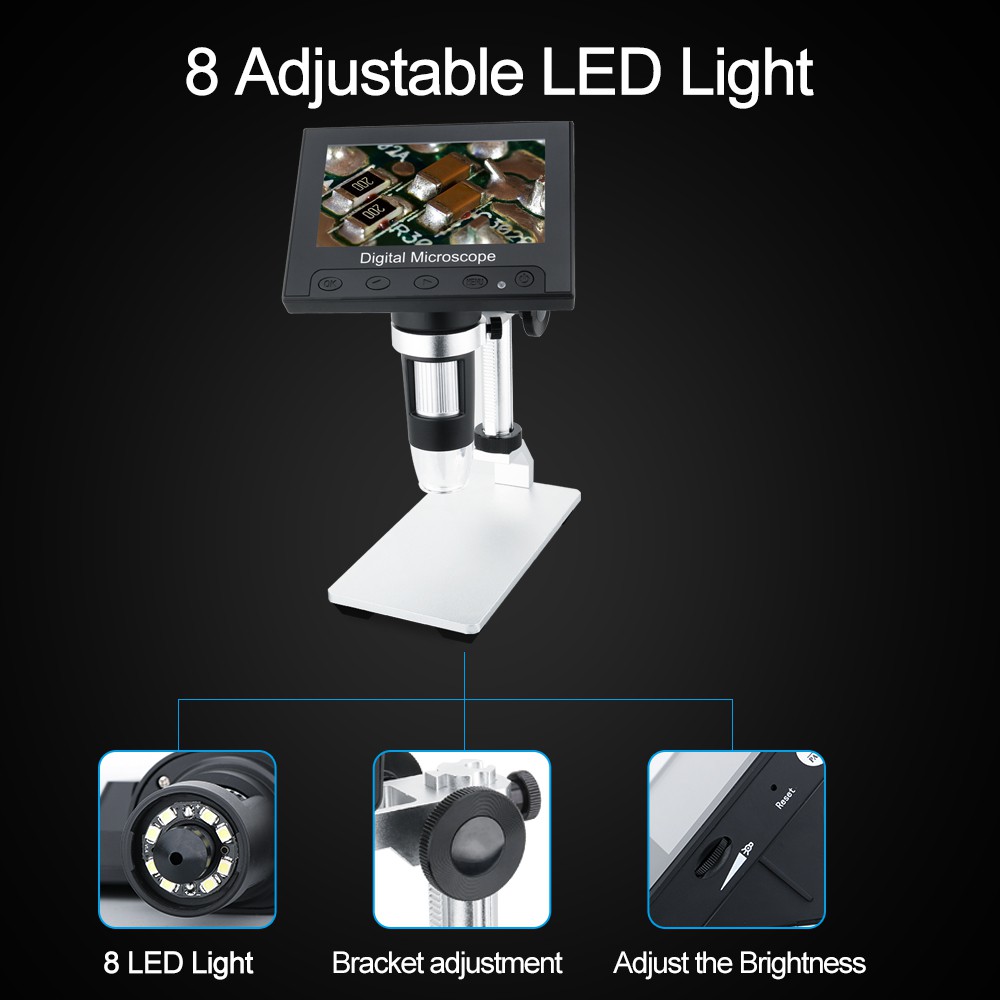
Aiming the reading microscope is a very important step when using a microscope. Some students randomly turn an objective lens to face the light hole when aligning the light, instead of using a low-power lens to align the light as required. I like to use one hand when turning the mirror, and it often turns the mirror down. Therefore, when teachers instruct students, they must emphasize the use of low-power mirrors for light. When the light is strong, use small apertures and flat mirrors, and when the light is weak, use large apertures and concave mirrors. The reflector should be rotated with both hands. Until a uniformly bright circular field of view. After the light is aligned, do not move the microscope casually, so as to prevent the light from entering the light hole accurately through the mirror.
There are round holes of different sizes on the shutter, which are called apertures, and the intensity of light can be adjusted by aligning different apertures with the light holes. The specimen is generally located in the center of the light hole for easy observation.
The meaning of magnification refers to the multiple of the eyepiece multiplied by the multiple of the objective lens. The one closest to the eye is called the eyepiece. The length of the eyepiece objective has nothing to do with the magnification. The distance between the objective lens and the slide glass has nothing to do with the magnification. Larger magnifications are also associated with larger but fewer cells in the field of view. The multiple has nothing to do with the brightness of the field of view, but has something to do with the reflector and the shading mirror.
Move the eyepiece, the dirt moves, and the dirt is in the eyepiece. Move the objective lens, the dirt moves, and the dirt is in the objective lens. Move the slide, the dirt moves, and the dirt is on the slide. Keep the other two still, move the other and you'll know.
First the low power mirror and then the high power mirror.
Unity: all have cell membrane, cytoplasm, ribosome, nucleic acid. All cellular organisms have DNA and RNA, and the genetic material is DNA.
Difference: The essential difference is that prokaryotes do not have a formed nucleus surrounded by a nuclear membrane.