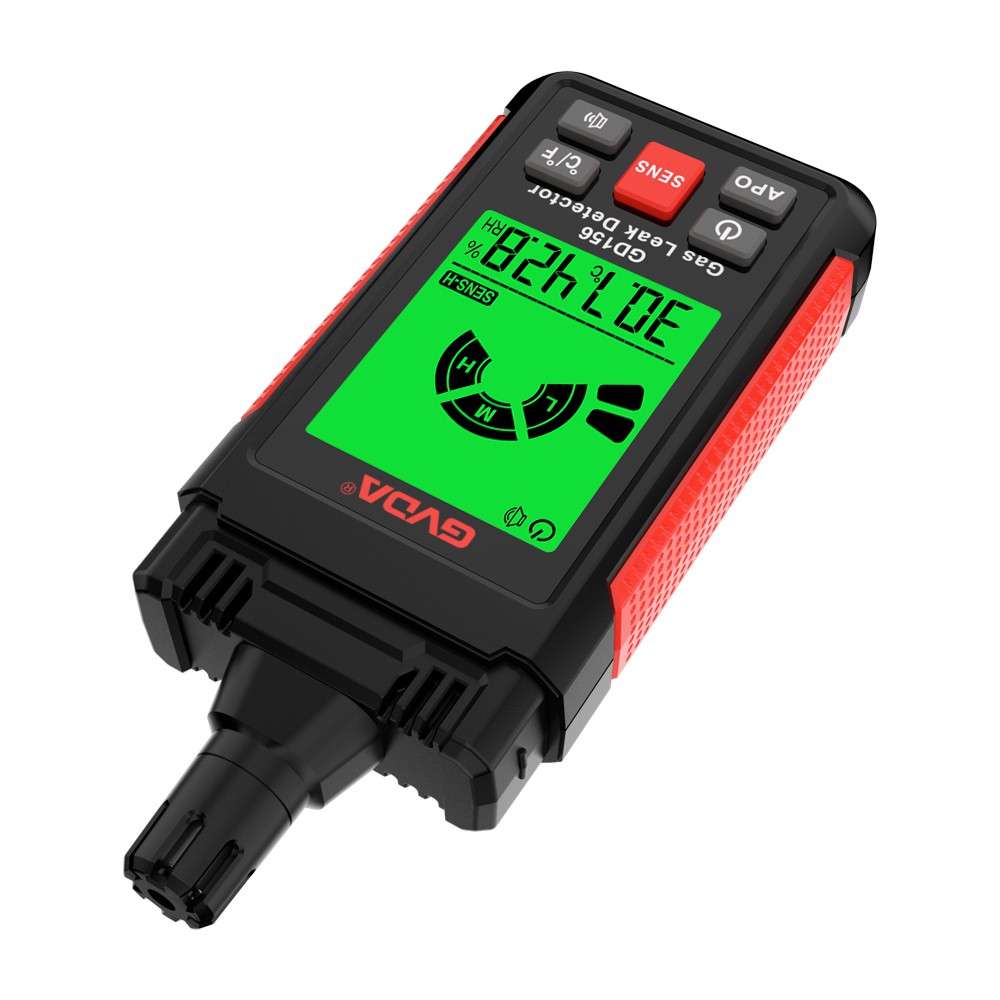
What type of sensor concept works best for flammable gas detectors?
The integrated sensor is the main part of the flammable gas detector. There are generally four types of detectors: infrared, electrochemical, and semiconductor, depending on the detection principle. The various approaches are also used to the scene's flammable gas detection. What kind of principle sensor is hence suitable for flammable gas detectors? To find out more about it, follow the Shenzhen Guoan!
Combustible gas detector sensor technology principle classification:
Sensor made of semiconductors
Combustible gas detectors in industry hardly ever operate on the theory of semiconductor sensors. Serious oily fumes from the kitchen rarely remain on the surface of sensitive materials because the semiconductor combustible gas detector has a low detection limit, a long service life, and only gas adsorption and desorption processes are involved in the detection process. As a result, the service life is unaffected. is effective and the finest option for house alarms.In household settings, it is typically necessary to be able to immediately identify when the concentration of flammable gas leakage is low, and it is enough to realize a single point alert. It also has to be able to satisfy the requirements of long-term maintenance-free and practical for home use.
2. A sensor for catalytic combustion
A principle that is currently commonly applied in the mainstream market is the catalytic combustion combustible gas detector. It responds with lightning quickness. The output of the sensor is nearly proportional to the gas concentration up to the lower explosion limit concentration (LEL), which results in extremely high accuracy and repeatability. The catalytic combustion combustible gas detector is therefore appropriate for quantitative detection in the coal mine, petroleum, chemical industry, gas, and other areas. However, the catalyst is simply disengaged, and the catalytic combustion sensor has a high operating temperature. Simultaneously, the silicone and sulfide released into the air by rubber and adhesive materials can easily poison the catalyst, ruining the sensor.In order to prevent the sensitivity of the catalytic sensor from deteriorating and significantly reducing accuracy, the standard gas is typically used to calibrate the alarm and adjust the magnification on a regular basis in industrial settings.
3. a thermal camera
The non-dispersive infrared (NDIR) concept is used by the infrared combustible gas detector to identify hydrocarbon flammable gases in the atmosphere. It benefits from good selectivity, potent anti-interference, and resistance to poisoning. has for many years had a significant impact on industrial safety and gas detection.
Electrochemical sensor, number 4,
The electrochemical sensor utilized by the combustible gas detector, which typically detects low concentrations of carbon monoxide in synthetic gas and incomplete combustion, is based on the principle of electrochemistry. Due to carbon monoxide's extreme toxicity, the alert point typically does not exceed 200 ppm. Combustible gas detectors work best when equipped with electrochemical gas sensors that have high levels of sensitivity and precision in order to avoid false alarms or leakage alarms.