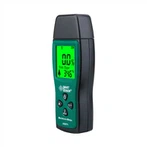
Why Multimeters Have Bandwidth
In the world of measuring instruments, digital multimeters are the most commonly used, and digital multimeters measure objects (voltage, resistance, capacitance). What I want to talk about today is the bandwidth of the multimeter to measure the voltage. The bandwidth unit is expressed as (Hertz: English stands for Hz). The bandwidth represents the frequency bandwidth that the device can effectively and accurately measure. Generally speaking, the bandwidth is -3db bandwidth, -20log (output voltage/input voltage)=-3db (log base is 10), it can be calculated: input voltage/output voltage=0.7; the response of the multimeter to the 20Hz signal is accurate Yes, when the voltage is gradually increased, the output will change due to the different response characteristics of the multimeter to different frequency signals. When the output voltage = 0.7 times the input voltage at a certain frequency, it means that the signal has reached the -3db bandwidth of the multimeter.
Why do multimeters have bandwidth?
The first method is: when we measure the current, it is easiest to measure the bandwidth of the model. When the engineer adjusts it to the current level, the black and red wires that extend out are connected to the incoming signal wire on one side, and the input signal wire on the other side, and observe the current change. If there is a value, it means there is a signal, otherwise, there is no signal.
The second method is: electricians can creatively use the current gear to detect the current between the two lines of the network cable (one dark color, one light color), a total of four groups have current, then there is a signal, otherwise there is no signal .
In many multimeters, the bandwidth of the Fluke multimeter depends on the factors of different multimeter models (basic characteristics, reading, true RMS, DC accuracy, etc.) to determine its bandwidth results. Generally there are (20KHz to 100KHz) ranging