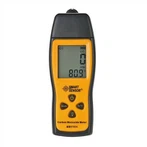
With the increasing focus on indoor healthy air quality and energy efficiency, there has been an increasing demand for gas detection instruments and IAQ controllers in the HVAC market recently. Specifically, the most common types of gas detectors/ventilation controllers are CO2 or carbon dioxide detectors. These controllers sense carbon dioxide levels and, once high enough, send signals to control ventilation equipment to remove and replace air in the space. Typically, these sensors will send a proportional signal to the damper motor, which will adjust accordingly to allow fresh air into the space. Additionally, many controllers have relays that will open or close contacts to turn on or off power to the exhaust and/or supplemental fans.
Carbon dioxide, carbon dioxide detectors monitor the space occupied by a person or animal to remove excess carbon dioxide as a byproduct of breathing. High levels of carbon dioxide have been linked to what's called "sick building syndrome." Most building codes require a certain amount of make-up or turnover of air in order to avoid a large build-up of CO2 and the resulting health problems. Typically, CO2 detectors have adjustable setpoints, an analog signal, and one or more relays.
Carbon monoxide and nitrous oxide, CO, NO2, detectors Spaces for operating internal combustion engines: parking garages, service garages, small engine workshops, warehouses, underground garages, generator rooms. Carbon monoxide is a by-product of gasoline combustion, while nitrogen dioxide is a by-product of diesel combustion. Much like CO2 controllers, these units monitor gas and send proportional analog signals, and/or have relays in contact with stage fans to displace toxic air in a given space.
Although it is possible to maintain only a constant ventilation rate, this is generally not preferred as the ventilation rate should match the demand and will generally vary with the demand for these gases. Additionally, as discussed in the previous article, building ventilation and associated building pressure should be balanced. Therefore, in most cases, a demand control system is desirable. This type of system will remove toxic air as needed, while replacing that air with an equal amount of fresh make-up air. The driving factor in the system is a properly applied IAQ gas detector/controller.