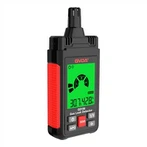
Will ambient temperature affect the performance of flammable gas detectors?
Combustible gas detector is an important safety protection equipment in industrial production and daily life, and its detection performance is directly related to the safety protection effect. Environmental temperature, as a common on-site variable, is often overlooked by users, but it has an undeniable impact on the operating status of the detector. What are the specific aspects of this impact and how should we respond?
1, The direct impact of temperature on core sensors
Sensors, as the core components of combustible gas detectors, are particularly sensitive to temperature changes. Catalytic combustion sensors rely on the combustion reaction of combustible gases under the action of catalysts to generate signals. Low temperature environments can reduce catalyst activity, slow down gas oxidation reaction rates, and cause a decrease in sensor sensitivity, making it difficult to capture low concentrations of combustible gases and increasing the risk of false alarms. High temperature will intensify internal chemical reactions, not only causing drift in detection data, but also accelerating catalyst loss and shortening sensor lifespan.
Electrochemical sensors are also significantly affected by temperature, and temperature changes can alter the activity of the electrolyte. Low temperature may increase electrolyte viscosity, slow down ion migration rate, and prolong sensor response time; High temperature may cause electrolyte evaporation, damage the internal structure of the combustible gas detector sensor, and affect the detection effect.
2, Temperature indirectly interferes with detection through gas characteristics
Temperature changes can alter the physical properties of combustible gases, indirectly affecting detection results. The gas density varies with temperature fluctuations, and combustible gases of the same concentration have different diffusion rates and distribution states at different temperatures. Gas diffusion accelerates in high-temperature environments, which may cause combustible gas detectors to receive high concentration signals in a short period of time, leading to false alarms; Gas diffusion is slow in low-temperature environments, and the detector may not be able to capture leaked gas in a timely manner.
In addition, sudden temperature fluctuations can also affect the circuit system of combustible gas detectors. Electronic components in circuits are sensitive to temperature, and drastic temperature fluctuations may alter component parameters, affecting the stability of signal processing and transmission, thereby reducing the accuracy of detection data.
3, Practical measures to address the impact of temperature
Targeted measures can be taken to reduce interference caused by temperature. Select a suitable combustible gas detector based on the temperature range of the usage environment, and ensure that the equipment operates within the appropriate temperature range. Regularly calibrate the detector, especially in environments or seasons with significant temperature changes, to correct temperature induced errors through calibration. At the same time, temperature control measures can be taken, and a heat dissipation device can be installed for the detector in high temperature environments, while insulation treatment should be done for low temperature environments to maintain stable working temperature.