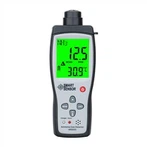
Why does a gas detector alarm as soon as it is turned on?
In various scenarios such as industrial production, indoor decoration, and chemical experiments, VOC toxic gases are often hidden in the environment. Most of these gases are toxic and irritating, and some even pose a risk of cancer. If not detected in a timely manner, they can have adverse effects on health and the environment. VOC detector is an important tool for monitoring such gases. Understanding the types of gases it can detect can enable it to better perform its monitoring role in practical scenarios.
1, Common volatile organic toxic gases
This type of gas is the most commonly encountered in daily monitoring, among which benzene derivatives include benzene, toluene, xylene, etc., which are mostly present in chemical products such as paints, coatings, adhesives, etc. Strong carcinogenicity is its main hazard, and long-term exposure can damage the hematopoietic and nervous systems; Halogenated hydrocarbons include chloroform, carbon tetrachloride, trichloroethylene, etc., which are commonly found in the dry cleaning industry, metal degreasing, and chemical production processes. They can cause serious toxicity to organs such as the liver and kidneys, and some may also cause teratogenic and mutagenic problems; Aldehydes and ketones include formaldehyde, acetaldehyde, acetone, etc. Formaldehyde is widely present in decoration materials and furniture, which can irritate the respiratory tract and skin, and easily cause allergies. Acetone, as a commonly used solvent, can inhibit the central nervous system when exposed to high concentrations.
2, Toxic gases containing sulfur and nitrogen
Although some of these gases do not strictly belong to VOCs, the composite VOC detector is compatible for detection. Sulfur containing gases such as hydrogen sulfide and methyl mercaptan are commonly found in wastewater treatment and oil extraction scenarios. Hydrogen sulfide is a highly toxic gas that can cause dizziness and nausea when inhaled in small amounts, and can quickly endanger life at high concentrations. Methyl mercaptan mainly comes from chemical production and has a foul odor that strongly irritates mucous membranes; Nitrogen containing gases such as aniline and pyridine are used in dye and pharmaceutical production. Aniline can be absorbed through the skin and cause poisoning, leading to methemoglobinemia. Pyridine, as a chemical raw material, is irritating and long-term exposure can damage liver and kidney function.
3, Other volatile toxic gases
Esters and ethers such as ethyl acetate and ether are commonly used as solvents in coatings and inks, which can irritate the eyes, nose, and throat. Ether has been used as an anesthetic, and high concentration exposure can inhibit the central nervous system, which may lead to respiratory paralysis in severe cases; Olefins and alkynes such as ethylene, propylene, acetylene, etc. High concentrations of ethylene can cause consciousness disorders, while propylene can irritate the eyes and respiratory tract. Long term exposure may affect the digestive system.
Different models of VOC detectors can detect different types of gases due to differences in sensor types, detection principles, and configurations. Some portable detectors focus on detecting specific types of VOCs, while composite devices can simultaneously monitor multiple gases. In practical use, the appropriate detector model can be selected according to the gas type in the application scenario.