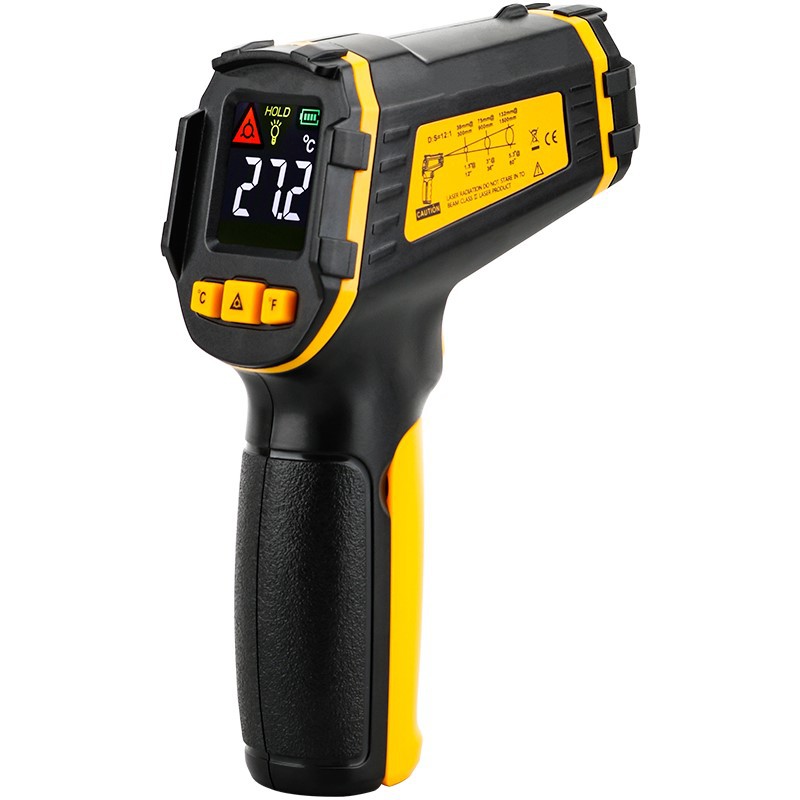
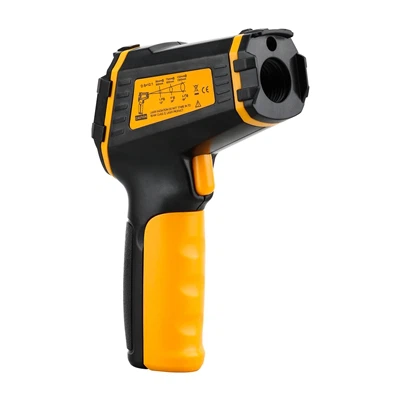
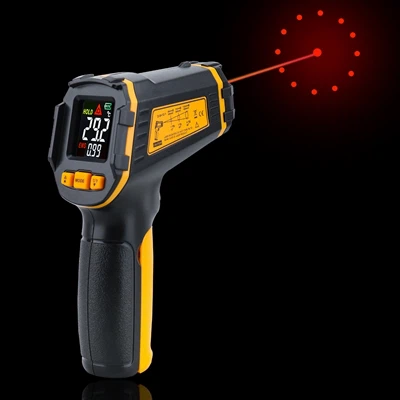
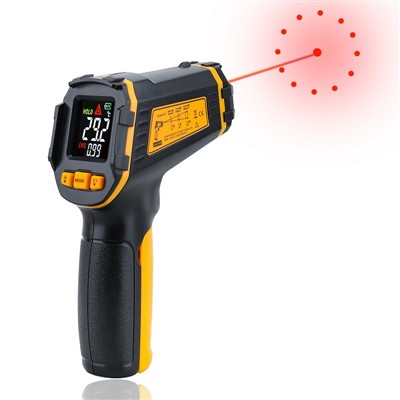
Working Principle and Advantages of Infrared Thermometers
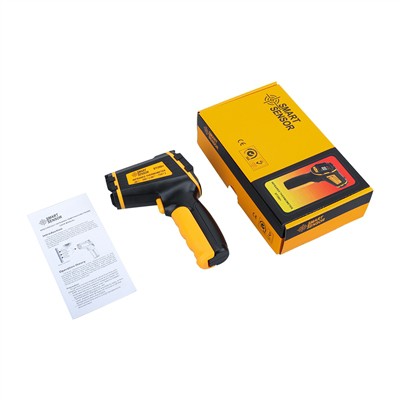
The temperature measurement principle of an infrared thermometer is to convert the infrared radiant energy emitted by an object (such as molten steel) into an electrical signal. The intensity of infrared radiant energy corresponds to the surface temperature of the object. The temperature of the measured object can be determined according to the magnitude of the converted electrical signal.
Infrared temperature measurement technology has evolved to enable scanning measurement on thermally variable surfaces, generating temperature distribution images and quickly detecting hidden temperature differences. This is the working principle of infrared thermal imagers. Infrared thermal imaging was first applied in the military field. In 1965, Texas Instruments of the United States developed the world's first infrared scanning reconnaissance system. Later, Western countries successively adopted infrared thermal imaging technology for aircraft, tanks, warships and other military equipment as thermal aiming and target reconnaissance systems, greatly improving target search and strike capability. The infrared thermal imagers manufactured by Sweden's AGA Corporation once led the civil technology market. Nevertheless, how to realize the widespread popularization of infrared temperature measurement technology remains an important research topic.
Working Principle of Infrared Thermometers
An infrared thermometer consists of an optical system, photoelectric detector, signal amplifier, signal processing module, display and output unit. The optical system collects infrared radiant energy from targets within its field of view, which is defined by the structure and layout of optical components. The focused infrared energy is converted into an electrical signal by the photoelectric detector. After amplification, signal processing, internal algorithm calculation and target emissivity correction, the signal is finally converted into the accurate temperature value of the measured object.
In nature, all objects with a temperature above absolute zero continuously emit infrared radiation into the surrounding environment. The radiant energy intensity and wavelength distribution of infrared emission are closely related to an object's surface temperature. Therefore, the surface temperature of an object can be accurately measured by detecting its self‑emitted infrared energy - this is the fundamental physical principle of infrared radiation thermometry.