Classification of electric soldering iron and instructions before use
For those who are interested in electronics, the electric soldering iron is a treasure. The quality of the product is determined by how well the components are welded together, and welding technology is the fundamental link in ensuring the reliability, quality, and quality of the welded product. An example would be an electric soldering iron with internal heating, an electric soldering iron with external heating, an electric soldering iron with a constant temperature, an electric soldering iron with tin suction, etc.
Electric soldering iron of the internal heating variety: Connecting rod, handle, spring clip, soldering iron core, soldering iron tip, and other components make up this item. The soldering iron head, which is constructed of nickel-chromium resistance wire coiled around a porcelain tube, receives the soldering iron core of the electric soldering iron.
Electric soldering iron of the external heating variety: The soldering iron's head is inside the core, and the matrix is comprised of copper alloy material with excellent thermal conductivity. The soldering iron tip can be extended or contracted; if you desire a greater temperature, shorten the soldering iron tip.
A magnet thermostat is positioned in the soldering iron head of an electric soldering iron that maintains a constant temperature. A constant temperature electric soldering iron can be utilized if the welding temperature is low and the welding period is short.
Tin-absorbing soldering iron: This desoldering instrument, which combines an electric soldering iron and a piston-type tin suction device, is adaptable, practical, and useful for a variety of tasks.
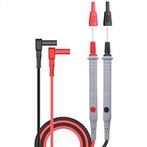
It is best to measure the power plug's resistance before using the electric soldering iron to determine whether it may be utilized. It can be utilized if the resistance is several thousand ohms or greater, but it cannot be used if the resistance is zero or infinite. When the resistance is zero or infinite, it indicates a short circuit inside the soldering iron and when it is zero or infinite, an open circuit.
Some practices before using the electric soldering iron
When using a new soldering iron for the first time, make sure the tip is bright, heat and melt the solder while dipping it in rosin and making multiple contacts with the solder wire, and evenly coat the tip with solder. This serves two purposes: to make subsequent uses easier and to keep the soldering iron's tip from oxidizing. The surface of the soldering iron tip will have an oxide layer since it has been used for a long time and needs to be treated before use because it is difficult for tin to eat through the oxide layer.Therefore, to make the surface of the soldering iron tip brilliant, the oxide must be cleaned with fine sandpaper or a file. Install a new electric soldering iron treatment procedure after that, and apply a coating of solder uniformly throughout the soldering iron head's surface.
The heating of the electric soldering iron is unrelated to oxygen. Alternating current is used by the electric soldering iron to heat and melt the solder wire. What the questioner claimed may be true: if an electric soldering iron is left on and electrified for an extended period of time without being used, its service life will be shortened and its ability to melt tin will be impaired. In addition, prolonged heating will result in the soldering iron's tip becoming oxidized or dying from burns. Thus, tin is no longer used by the electric soldering iron.Tin undergoes a chemical reaction with oxygen during the process of not consuming it called an oxidation, in which oxygen supplies oxygen. Under normal conditions, it is slowly oxidized, but because the energized time is too long and the temperature rises quickly, the oxidation reaction is facilitated and the oxidation speed of the soldering iron tip and core of the electric soldering iron is accelerated.