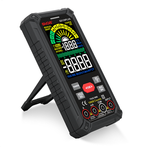
10 Precautions for the Use of Sound Level Meters
1. When measuring, the instrument should choose the correct gear according to the situation, hold the sound level meter horizontally on both sides with both hands, and point the microphone towards the measured sound source. Extension cables and extension rods can also be used to reduce the influence of the sound level meter's appearance and human body on the measurement. The location of the sound level meter should be determined according to relevant regulations.
2. The sound level meter is powered by batteries, and the battery voltage should be checked to ensure that it meets the requirements: the meter function switch is set to the "battery" position, and the "attenuator" can be set arbitrarily. At this time, the indication on the meter should be within the rated battery voltage range, otherwise the battery needs to be replaced. Pay attention to the polarity when installing batteries or external power sources, and do not reverse the connection. If not in use for a long time, the battery should be removed to prevent leakage and damage to the instrument.
3. Before use, read the instruction manual to understand the usage and precautions of the instrument. Preheat according to the preheating time specified in the sound level meter instruction manual (e.g. 10 minutes).
4. When the battery voltage used in the sound level meter is insufficient, it should be replaced.
5. Calibrate amplifier gain: Set the meter function switch to "0" and the "attenuator" switch to "calibrate". At this time, the meter pointer should be in the red line position, otherwise the sensitivity potentiometer needs to be adjusted.
6. When the measured sound level is unknown, the "attenuator" must be placed at the maximum attenuation position (e.g. 120dB), and then gradually adjusted to the required attenuation level during measurement to prevent the measured sound level from exceeding the range and damaging the sound level meter
7. Do not disassemble the microphone to prevent it from being thrown or dropped, and place it properly when not in use. 8. The sensor is an extremely delicate and easily damaged expensive component, so be careful to handle it with care throughout the entire experiment. After the experiment is completed, remove the sensor and place it in the designated location.
9. The instrument should be avoided from being placed in places with high temperature, humidity, sewage, dust, and air or chemical gases containing high levels of hydrochloric acid and alkali.
10. Do not disassemble the instrument without authorization. If the instrument is not functioning properly, it can be sent to a repair unit or factory for maintenance.