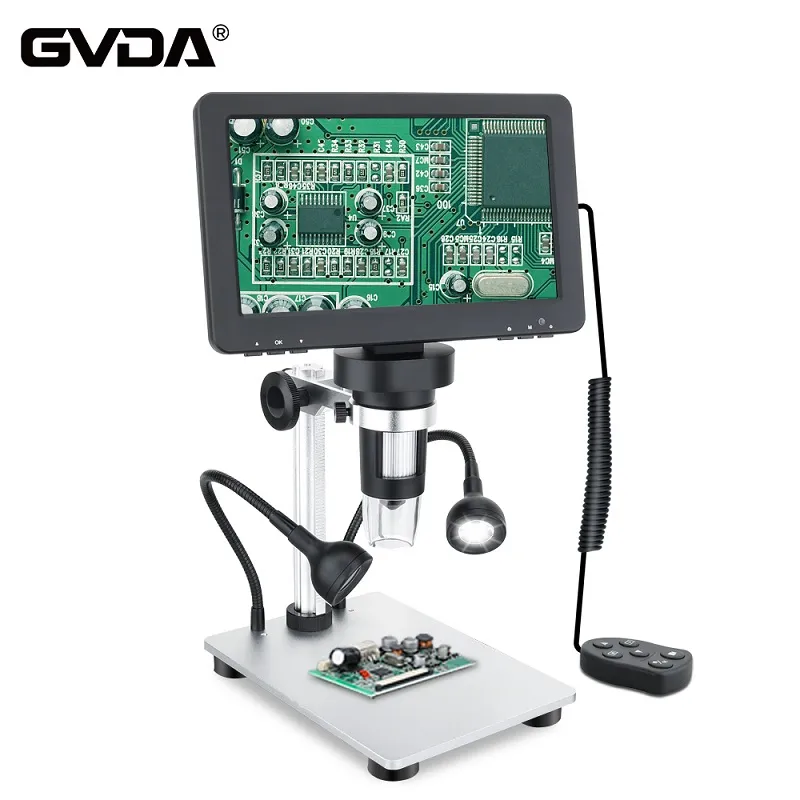
A confocal microscope is a specialized variant of optical microscopes.
The working principle of confocal microscopy is based on the concept of "confocal", which means that only points on the focal plane of the objective lens can be imaged clearly, while points outside the focal plane are excluded. This is achieved through the use of special optical systems, such as a confocal aperture (pinhole). In confocal microscopy, a light source (usually a laser) is irradiated onto the sample, and then the light reflected or emitted from the sample is collected. Only light from the focal plane can pass through the confocal aperture, while light from other positions is blocked, resulting in a very clear focal plane image.
In addition, confocal microscopy can scan the sample layer by layer and collect image data for each layer, and then use this data to reconstruct the three-dimensional morphology of the sample. This layer by layer scanning method provides higher resolution than traditional optical microscopes, especially in the vertical direction of the sample.
Confocal microscope can also be referred to as measuring microscope. When used for precise measurement of sample size, shape, surface roughness, or other physical properties, it can provide very accurate three-dimensional morphology images, making it a powerful tool for measuring sample surface features. It has wide applications in various fields such as materials science and semiconductor industry, especially in situations where high resolution and 3D imaging capabilities are required. The measurement characteristics are as follows:
1. High precision measurement: Confocal microscopy can provide nanometer level resolution, enabling it to measure very small sample features.
2. Three dimensional morphology: By scanning the sample at different depth levels, confocal microscopy can generate three-dimensional images of the sample, which is very useful for analyzing the three-dimensional structure of the sample.
3. Surface roughness analysis: Confocal microscopy can accurately measure and analyze the surface roughness of samples. It has strong vertical depth resolution ability, which can clearly display the image morphology details of small objects, show fine detail images, and have better imaging effects for products with large slopes. This is very important for materials science and engineering applications.