Adjusting Emissivity Settings for Infrared Thermometers
Infrared radiation is ubiquitous and perpetual. The greater the temperature difference between objects, the more pronounced the radiation effect. Through a vacuum, infrared radiant energy emitted by the sun travels 93 million miles across space to reach the Earth, where it is absorbed and provides warmth. When standing in front of refrigerated display cabinets in shopping malls, the heat from the infrared radiation emitted by our bodies is absorbed by chilled food, creating a distinct cooling sensation. These two examples demonstrate obvious radiation
effects, allowing us to clearly perceive the changes and existence of infrared radiation.
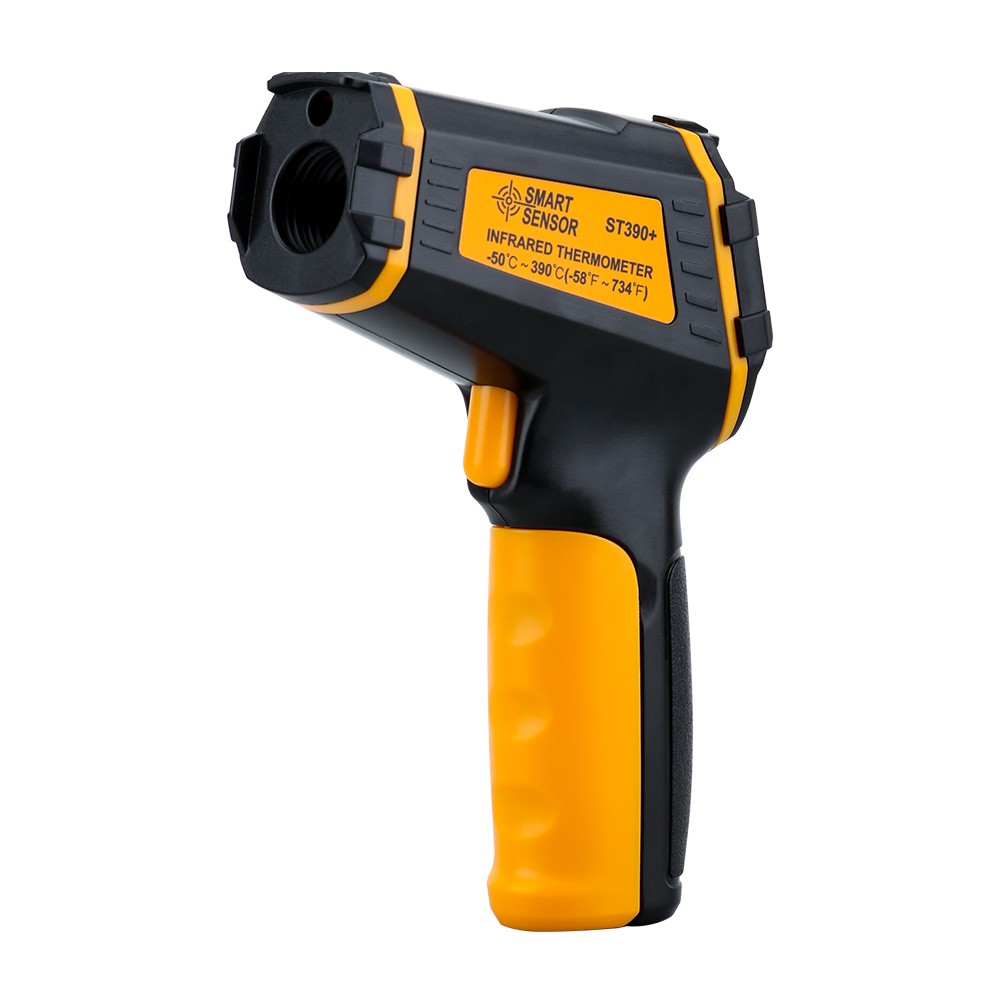
To quantify the effects of infrared radiation, it is necessary to measure radiation temperatures, for which infrared thermometers are used. Different materials exhibit distinct infrared radiation characteristics. Before taking temperature readings with an infrared thermometer, it is essential to understand the fundamental principles of infrared temperature measurement and the radiation properties of the measured material.
Infrared Radiance = Absorptivity + Reflectivity + Transmissivity
All infrared radiation is absorbed upon emission, therefore absorptivity equals emissivity. Infrared thermometers measure only the radiant energy emitted by object surfaces and cannot detect infrared energy dissipated in the air. For practical measurement applications, transmissivity can be neglected, resulting in the core formula for infrared temperature measurement:
Emissivity = 1 − Reflectivity
Reflectivity is inversely proportional to emissivity. The stronger an object's ability to reflect infrared radiation, the weaker its capacity to emit infrared radiation. Reflectivity can be roughly estimated by visual inspection. Polished new copper has high reflectivity and low emissivity (0.07–0.2), while oxidized copper features low reflectivity and higher emissivity (0.6–0.7). Heavily tarnished and blackened copper has an even lower reflectivity with a correspondingly higher emissivity of 0.88. Most painted surfaces have a high emissivity of 0.9–0.95, with negligible reflectivity.
For most infrared thermometers, the key parameter to configure is the standard emissivity value of the measured material, which is factory preset to 0.95. This default setting is sufficient for measuring organic materials and painted surfaces.
Adjusting the emissivity setting on the thermometer compensates for insufficient surface radiant energy of certain materials, especially metals. The impact of reflectivity on measurement accuracy only needs to be considered when high-temperature infrared radiation sources are present near the measured surface and cause reflective interference.