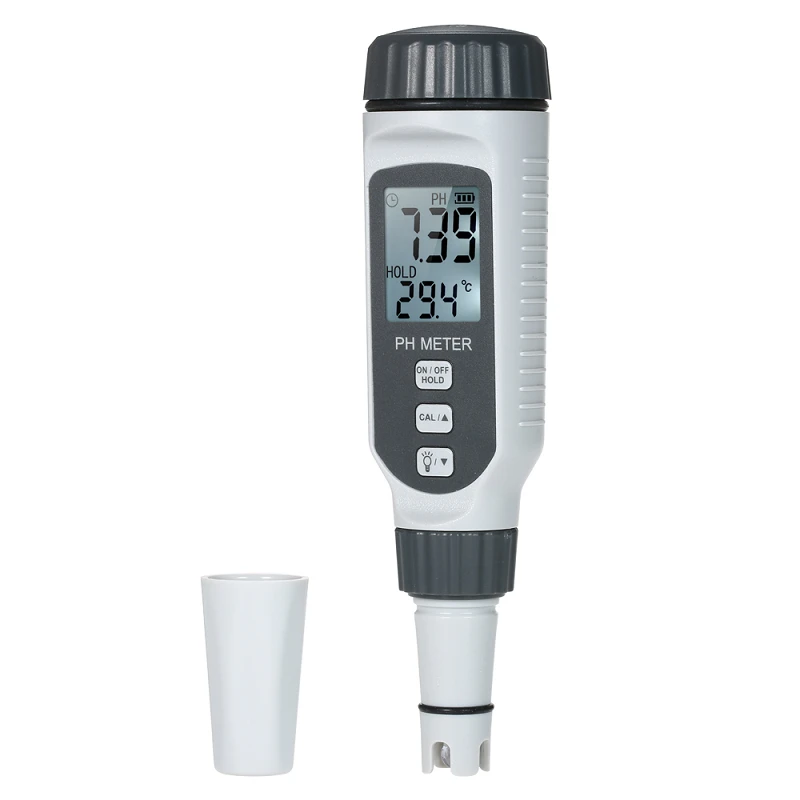
Analysis of the causes of pH meter electrode poisoning
For flow reference pH meter electrodes, the formation of electrical channels relies on the micro-osmotic pressure of the electrolyte in the electrode, allowing the electrolyte to penetrate into the measurement solution. When the medium pressure or concentration is high, the rehydration channel is not smooth, or there are bubbles, etc., it may hinder the extravasation of the electrolyte and increase the resistance in the middle of the electrical path. If the medium reversely penetrates into the pH meter electrode, it will contaminate the salt bridge or even It may react chemically with the electrolyte or internal electrode (for example, AgCl + sulfide → Ag2S) to poison the electrode.
In a strongly oxidizing medium, the loss of alkaline substances (mainly monovalent cations) in the sensitive glass membrane will damage the hydration layer and cause poisoning of the pH meter electrode. Acid-resistant pH meter electrodes can be used. The special process measures (special ion addition formula) used in the manufacturing process enhance the resistance of the glass membrane to acidosis. At the same time, the zero potential of the electrode corresponds to pH0=2, thus making the acidic range Linearity is corrected.
The pH meter electrode does not have a good linear relationship outside of pH 2 to pH 9. It is easy to form a large amount of hydronium ions H3+O in strongly acidic solutions, causing the number of H+ on the surface of the pH meter electrode to decrease relatively and increase the pH value. Na+ in a strong alkaline medium will also participate in the exchange process between H+ in the solution and H+ on the electrode hydration layer, causing the pH meter electrode potential to increase and the ph value to be low.
Two-point calibration method of pH meter
(1) Wash and dry the electrode, immerse it in the pH6.86 or pH7.00 standard solution, and place the instrument temperature compensation knob at the solution temperature. After the indication value is stable, adjust the positioning knob so that the instrument indication value is the pHs value of the standard solution.
(2) Take out the electrode, wash it, spin it dry, and immerse it in the first standard solution. After the indication value is stable, adjust the slope knob of the instrument so that the instrument indication value is the pHs value of the first standard solution.
(3) Take out the electrode, wash it and spin it dry, and then immerse it in the pH6.86 or pH7.00 buffer solution. If the error exceeds 0.02pH, repeat steps (1) and (2) until the correct pHs can be displayed in both standard solutions without adjusting the knob.
(4) Take out the electrode and spin it dry, adjust the pH temperature compensation knob to the temperature of the sample solution, immerse the electrode in the sample solution, shake it and place it still until the reading is stable.