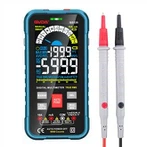
Application of Analytical Carbon Dioxide Gas Detector
1. The use of planting greenhouses
Carbon dioxide is one of the raw materials for photosynthesis of green plants, and 95% of the dry weight of crops comes from photosynthesis. A gas detector is an instrumentation tool for gas leakage concentration detection, mainly referring to a portable/handheld gas detector. Therefore, carbon dioxide has also become an important factor affecting crop yield. Plastic greenhouse cultivation keeps crops in a relatively closed place for a long time, and the carbon dioxide concentration in the shed varies greatly. It reaches a value of 1000-1200ppm before sunrise, and drops to about 100ppm 2.5-3 hours after sunrise, which is only the atmospheric concentration (330ppm). About 30% of that, and it lasted until 2 hours in the afternoon before it began to rise, and it returned to the atmospheric level around 4 pm. Vegetables generally require a carbon dioxide concentration of 1000-1500ppm. Therefore, the shortage of carbon dioxide in plastic greenhouses is quite serious, which has become an important factor affecting the production of vegetables in plastic greenhouses. Installing a carbon dioxide monitor in a plastic greenhouse can ensure a timely alarm when the concentration of the carbon dioxide monitor is insufficient, so that the gas fertilizer can be used. Ensure that vegetables, edible fungi, flowers, and traditional Chinese medicines are listed in advance, with high quality and high yield.
1. The impact of carbon dioxide application on vegetable yield According to the report of China Agricultural Information Network: Cucumber, tomato, and zucchini are three common vegetables. In view of this actual situation, carbon dioxide fertilization experiments were carried out on these three vegetables, and the effect of increasing production was very significant. Applying carbon dioxide concentration of 1000 mg/kg to the three kinds of vegetables, the average yield of cucumber increased by 465.5 kg per 667 square meters, an increase of 27.1%; the average yield of tomatoes increased by 410.7 kg per 667 square meters, an increase of 23.6%; the average yield of zucchini increased by 373.2 kg per 667 square meters , an increase of 21.9%. the
2. Effects of carbon dioxide application on vegetable plant traits The plant traits of vegetables in plastic greenhouses were significantly better than those without carbon dioxide application. After applying carbon dioxide to cucumbers, the plants grow well. The plants that are applied are 15-20 cm taller than those that are not applied, and the leaves are 2-3 longer. The leaves are significantly larger and thicker. The melons are fruiting at the nodes, and the fruit setting rate is high. There are 3 to 5 fruiting melons per plant. The melon strips that are applied are black and green, and the top 4 to 5 cm of the melon strips that are not applied are yellow. Moreover, the application of carbon dioxide gas fertilizer can also enhance the cold resistance and disease resistance of plants. After applying carbon dioxide to the tomatoes, the plants were significantly taller, the leaves were dark green and thicker, the fruits matured earlier, and the surface of the fruits was shiny. The appearance of zucchini plants with carbon dioxide application is more obvious than that without application. The leaves of zucchini are hypertrophic, the stems are thick, and the plants are large and strong, while the plants without application are small and weak. And Shi's performance results are early.
2. Large livestock farms:
Some large-scale farms, such as: raising cattle, pigs, chickens, etc., are raised in some closed or semi-closed pens. Because of the large number and density of livestock and poultry raised, these animals will exhale a lot of carbon dioxide. If If there is no ventilation in a closed space for a long time, the concentration of carbon dioxide will be too high, which will cause the animals to suffer from hypoxia, lack of energy, fatigue, loss of appetite, slow weight gain, and high morbidity. At the same time, lack of air circulation can easily lead to epidemic outbreaks. For example, poor ventilation in the pig house will lead to a series of problems such as decreased immunity, decreased feed conversion rate, and respiratory infectious diseases. In recent years, mycoplasma pneumonia (MPS), porcine reproductive and respiratory syndrome (PRRS), porcine rhinitis, porcine infectious pleuropneumonia (PP), porcine pseudorabies, swine flu, porcine ring virus (PCV2) and other diseases Infection causes an increase in the incidence of pig respiratory system and aggravates the harm. After the onset, it is difficult to control; the incidence rate is generally 40-40%, and the mortality rate is 5-30%. However, if the ventilation is too fast and the wind speed is too high in winter, the heat in the pig house will also be taken away, causing the room temperature to drop, the basal metabolism of the pigs to increase, and the growth to slow down; Heat can also make pigs uncomfortable. According to relevant data, it is confirmed that poor ventilation causes economic losses, and poor ventilation in pig houses increases feeding costs by 10% to 20%. Therefore, the detection of carbon dioxide concentration, temperature and ventilation rate in the breeding pen is very important. The above data can be monitored at any time by installing a carbon dioxide and temperature monitor in the breeding house and connecting it with a fan. When the carbon dioxide concentration exceeds the standard, the monitor will alarm and start the fan to automatically replace the fresh air; at the same time, the temperature and ventilation rate of the pens will be monitored at any time.
3. Manufacturers of energy-saving and environmental protection products:
Here is an example of a manufacturer of energy-saving doors and windows: there are many energy-saving doors and windows that can be ventilated without opening the window. In order to prove the energy-saving and ventilation of the product, the manufacturer will give the customer a carbon dioxide and The temperature monitor allows customers to measure the indoor carbon dioxide concentration at any time. This machine can also monitor the indoor temperature and ventilation rate at the same time. With these data that can be monitored scientifically at any time, these customers feel more at ease after using energy-saving doors and windows.
4. Underground safety production:
A lot of toxic gas and carbon dioxide will be produced during downhole operations. The high concentration of carbon dioxide will lead to severe hypoxia in the downhole, resulting in inability to breathe and unable to work normally. Putting a carbon dioxide monitor in the downhole working environment can monitor the concentration of carbon dioxide at any time. Within the normal working range, the downhole temperature can be monitored at the same time, so as to avoid some accidents and do a good job in related protection work.
5. Kindergartens, offices, schools, supermarkets:
For example: when there are dozens or hundreds of students in a school classroom, the concentration of carbon dioxide will increase if the windows are not opened for a long time, which will cause teachers and students to feel dizzy or sleepy, and reduce learning efficiency. If there is a carbon dioxide monitor in each classroom, adjust the machine to a suitable alarm value. If the alarm is triggered, you can open the window for fresh air, which can ensure the quality of the air and let the students have a quiet time. A learning environment free from outside distractions.