Application of Infrared Thermometer in Steel Rolling Production
Composition of infrared thermometer
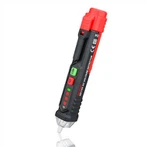
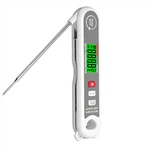
Infrared thermometers, also known as infrared radiation thermometers, determine the temperature of the measured object by measuring the electromagnetic radiation of the object, which comes from the energy contained in the object. For industrial applications we are concerned with infrared radiation extending from the shorter wavelengths of visible light to infrared light up to 20 μm. Therefore, an infrared thermometer (radiation thermometer) is a device that quantifies radiant energy and uses electrical signal output to express its corresponding temperature.
Infrared thermometers can generally be divided into four parts: namely, optical system, infrared detector, signal processing part, and display output part.
1 Optical system
The optical system is an important part of the infrared thermometer. Its main functions are: the convergence of radiant energy, the aiming at the target to be measured, the determination of the field of view of the thermometer, and a certain sealing effect on the inside of the thermometer.
2 Infrared detectors
The infrared detector is the core part of the infrared thermometer. The infrared detector receives the radiant energy of the measured object through the objective lens, converts the radiant energy into an electrical signal, and finally obtains the surface temperature of the measured object through subsequent processing.
3 Signal processing
The infrared detector converts the infrared radiation into an electrical signal, which is sent to the signal processing part, and is input to the microprocessor through the preamplifier and A/D conversion. At the same time, the ambient temperature compensation signal is also input to the microprocessor, which is linearized by the microprocessor. After processing, environmental compensation and emissivity correction, the corrected output signal is obtained.
4 display output
In practical applications, the temperature signal provided by the processor is used in two ways: one is to display it through the display; the other is to send the temperature signal to the industrial control system to realize the control of the production process, and there are also two ways to use it at the same time.
Different types of thermometers can display real-time value, maximum value, minimum value, average value, difference, and can also display emissivity setting value, alarm setting value, etc. After software processing, it can also display temperature curve, heatmap etc. The most commonly used thermometers are 0-20mA or 4-20mA current output. If a voltage signal is required, the current signal can also be converted and scaled.
Selection of Infrared Thermometer
In industrial applications, there are often some media between the pyrometer and the measured target, which can weaken or even completely block the radiation of the surface energy of the measured target, and the pyrometer can only measure the target it "sees". Our commonly used fixed thermometers mainly include the following categories:
① Broadband thermometer, or broadband thermometer, its spectral response range is limited by the optical system, mainly used to measure low temperature, equipped with a detector with a wide spectral response range.
② Select the band thermometer, its response wavelength is limited by the filter, and the response band of the detector can be selected according to the needs of the application.
③ The short-wave thermometer can reduce the measurement error when the emissivity changes. The short wave mentioned here is relative, and it can be a wavelength of 0.6 μm at a temperature of 1500K, or a wavelength of 3 μm at a temperature of 300K.
④ Colorimetric thermometers, also known as two-color thermometers, have better measurement results when used in "very dirty atmospheres".
In the selection of the thermometer, in addition to the required temperature range, the two parameters of the thermometer "temperature change percentage" and "emissivity change percentage" are also very important for the accurate selection of the thermometer:
① The temperature change percentage of the thermometer refers to the change of the output value of the object due to the temperature change. For infrared thermometers, the greater the percentage of temperature change, the higher its sensitivity.
② The change percentage of emissivity refers to the change of the output value of the instrument when the emissivity of the measured target changes. Since the emissivity of the steel plate changes randomly within a certain range at a certain wavelength and temperature during the steel rolling process, the change in the output value of the thermometer caused by the change in emissivity is not the real temperature change of the target. Therefore, it is also necessary to adjust the emissivity change percentage.