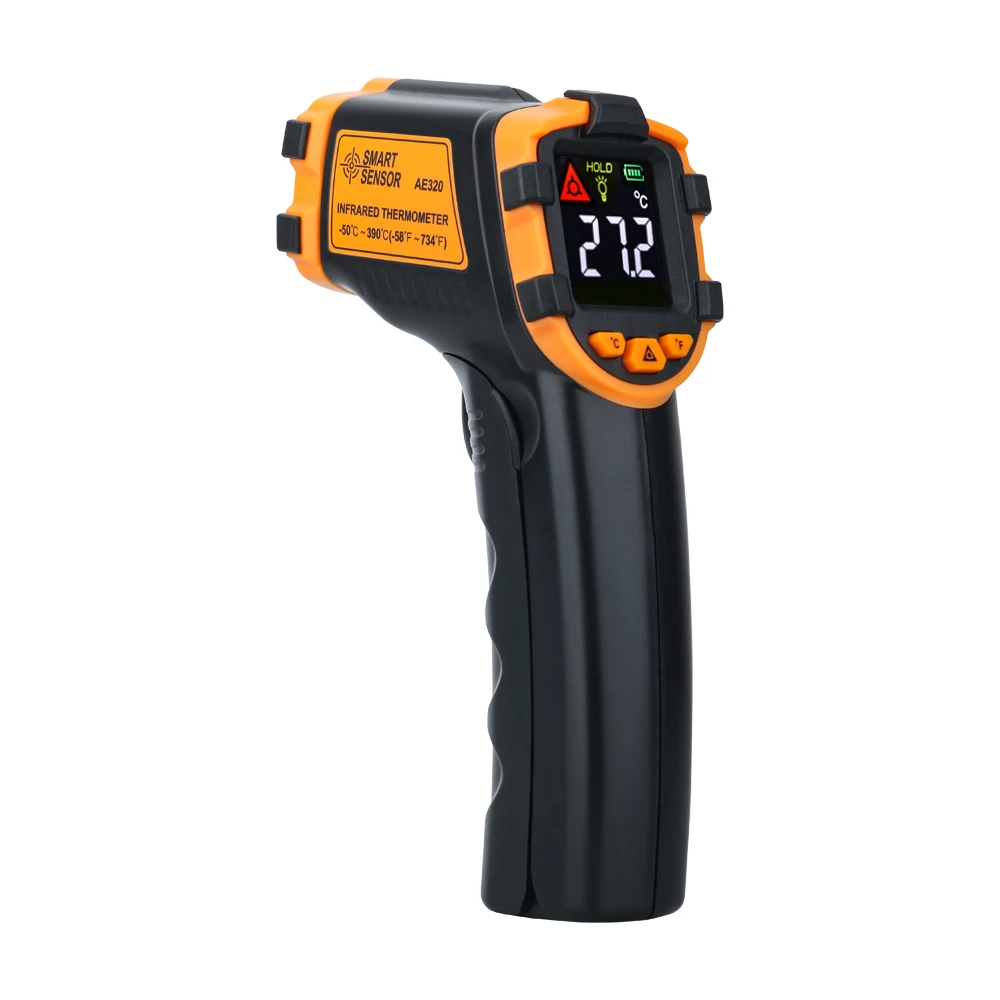
Application of Infrared Thermometers in Fault Diagnosis of Electrical Systems
In the applications listed below, infrared thermometers can effectively prevent equipment failures and unplanned power outages.
Connectors: Electrical connections tend to loosen gradually. Heat is generated due to repeated heating (expansion) and cooling (contraction), or surface dirt, carbon deposits and corrosion. Non-contact thermometers can quickly identify temperature rises that indicate serious problems.
Motors: To prolong the service life of motors, check whether the temperatures of power supply cables and circuit breakers (or fuses) are consistent.
Motor bearings: Inspect hot spots and perform regular maintenance or replacement before faults cause equipment breakdown.
Motor winding insulation: Extend the service life by measuring the temperature of the motor winding insulation layer.
Inter-phase measurement: Verify whether the temperatures of wires and connectors among different phases of induction motors, large computers and other equipment are equal.
Transformers: The windings of air-cooled components can be directly measured by infrared thermometers to detect excessive temperatures. Any hot spot indicates damage to the transformer windings.
Uninterruptible Power Supply (UPS): Locate hot spots on the connecting wires of UPS output filters. A low-temperature point may indicate an open circuit in the DC filter circuit.
Backup batteries: Inspect low-voltage batteries to confirm proper connections. Poor contact at battery terminals may generate enough heat to burn the battery core.
Ballasts: Check for overheating before the ballast starts to smoke.
Utilities: Identify hot spots on connectors, cable terminals, transformers and other equipment. Some models of optical instruments have a distance-to-spot ratio of 60:1 or higher, ensuring nearly all measured targets fall within the measurement range.