Buying an Upright or an Inverted Microscope?
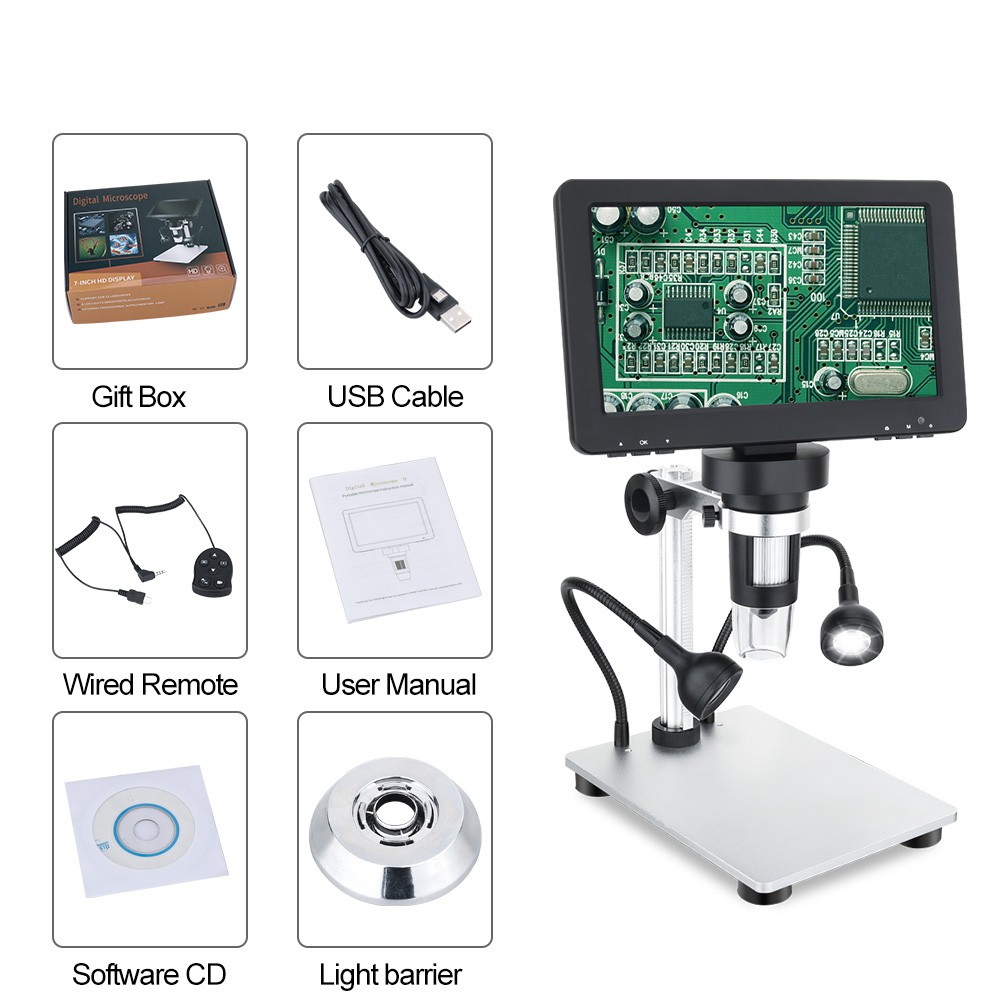
The upright metallographic microscope forms a positive image during observation, which brings great convenience to the user's observation and identification. In addition to the analysis and identification of metal samples with a height of 20-30mm, it is in line with people's daily habits. , so it is more widely used in transparent, translucent or opaque substances. Observation objects larger than 3 microns and less than 20 microns, such as cermets, electronic chips, printed circuits, LCD substrates, films, fibers, granular objects, coatings and other material surface structures and traces, can have good imaging effects. In addition, the external camera system can be easily connected to the video screen and computer for real-time and static and dynamic image observation, storage, editing, printing, combined with various software to meet the needs of more professional metallography, measurement, and interactive teaching fields. Inverted metallographic microscope uses the method of optical plane imaging to identify and analyze the structure of various metals and alloys. It is an important tool for metallographic research in metallography. It can be widely used in factories or laboratories for casting quality and raw material inspection. , or the research and analysis of metallographic structure of materials after process treatment, so as to provide intuitive analysis results, it is the key equipment for quality identification and analysis of casting, smelting, and heat treatment in mining, metallurgy, manufacturing, and mechanical processing industries. In recent years, the microelectronics industry needs high-magnification planar microscopy to support chip production. Therefore, metallographic microscopes have been introduced into this field for promotion and use, and are being continuously improved to meet the special needs of the industry. Inverted metallurgical microscope, because the observation surface of the sample coincides with the surface of the workbench downwards, and the observation objective lens is located under the workbench to observe upwards. This observation form is not limited by the height of the sample. Beautiful and generous, the base of the inverted metallographic microscope has a large supporting area, the center of gravity is low, safe, stable and reliable, the eyepiece and the supporting surface are inclined at 45°C, making observation comfortable.
In addition to the standard configuration selection, the inverted metallographic microscope has a direct image output function through technical improvement, and can be easily connected to a computer to apply software for intelligent processing according to process requirements. Simply put: put the upright sample on the bottom, and the inverted sample on the top. Upright objectives point down, inverted objectives point up. That is to say: the inverted lens is under the stage, and the test block is placed on the stage with the test surface facing down. At this time, the lens is down, the test block is upside down, and the lens observes the test surface from bottom to top.
The upright lens is on the stage, and the test block is placed on the stage facing up. At this time, the lens is on the top, the test block is on the top, and the lens observes the test surface from top to bottom.
After selecting a certain type of microscope according to the sample, you can basically refer to the above points when considering whether to choose an upright microscope or an inverted microscope. At the same time, you must also consider your existing sample preparation conditions, because the upright microscope The requirements for sample preparation are relatively high, while those for inverted microscopes are relatively low.