Calibrating the pH Meter Using One-Point and Two-Point Calibration
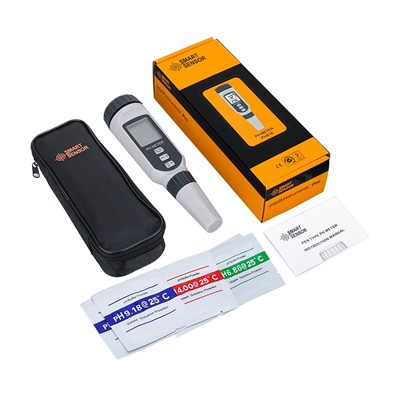
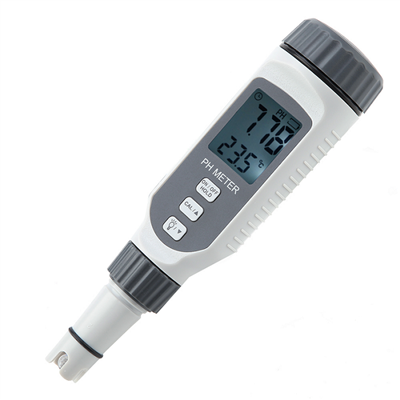
Any pH meter must be calibrated with a pH standard solution before it can measure the pH value of the sample. For samples with a measurement accuracy below 0.1 pH, the instrument can be adjusted using a one-point calibration method. Generally, a pH 4.01 or pH 7.00 standard is used. Buffer. Some instruments have an accuracy of only 0.2pH or 0.1pH, so the instrument only has a "positioning" adjustment knob. The specific steps are as follows:
(1) Measure the temperature of the standard buffer solution, look up the table to determine the pH value at this temperature, and adjust the temperature compensation knob to this temperature.
(2) Rinse the electrode with pure water and spin dry.
(3) Dip the electrode into the buffer solution and shake it, then place it still. After the reading is stable, adjust the positioning knob so that the instrument displays the pH value of the standard solution.
(4) Take out the electrode, rinse and spin dry.
(5) Measure the sample temperature and adjust the pH meter temperature compensation knob to the temperature value.
(6) Immerse the electrode into the sample solution, shake it and place it still, and the reading after stabilization is displayed.
What is a two-point calibration of a pH meter?
For precision-grade pH meters, in addition to "positioning" and "temperature compensation" adjustments, there is also an electrode "slope" adjustment, which requires two standard buffers for calibration. Generally, pH4.01 or pH7.00 is used for "positioning" calibration first, and then according to the acidity and alkalinity of the test solution, pH4.01 (acidic) or pH9.21 and pH10.01 (alkaline) buffer solutions are selected for "slope" Correction. The specific steps are:
(1) Wash the electrode and spin it dry, then immerse it in the pH4.01 or pH7.00 standard solution, and place the instrument temperature compensation knob at the solution temperature. After the indication value is stable, adjust the positioning knob so that the instrument indication value is the pH value of the standard solution.
(2) Take out the electrode, wash it, spin it dry, and immerse it in the first standard solution. After the indication value is stable, adjust the slope knob of the instrument so that the instrument indication value is the pH value of the first standard solution.
(3) Take out the electrode, wash it and spin it dry, and then immerse it in the pH4.01 or pH7.00 buffer solution. If the error exceeds 0.02pH, repeat steps (1) and (2) until the correct pHs value can be displayed in both standard solutions without adjusting the knob.
(4) Take out the electrode and spin it dry, adjust the pH temperature compensation knob to the temperature of the sample solution, immerse the electrode in the sample solution, shake it and place it still, and the reading will be stable.