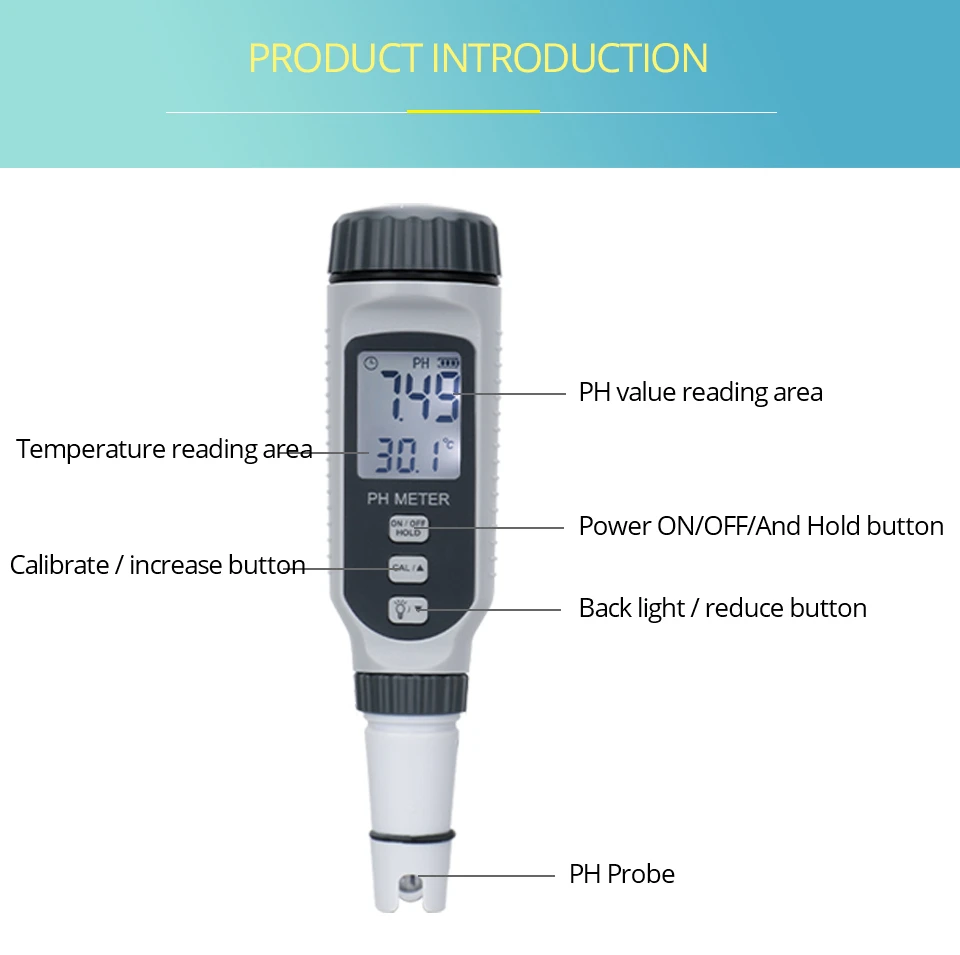
Characteristics and measurement principle of acid-base concentration meter
The non-contact detection method fundamentally eliminates the corrosion, pollution and polarization effects of strong corrosive media on electrodes
The frequency conversion excitation power supply and resonant circuit and its unique signal sampling method are used to replace the single frequency excitation method, so that the output voltage of the detection transformer is increased several hundred times. The flow-through sensor adopts a low-temperature magnetic structure and ferromagnetic shielding, and has no zero-point drift phenomenon, which greatly improves the accuracy, sensitivity and stability of the instrument
The imported all-plastic sealed shell can be used for a long time in the harsh environment such as humidity, dust and corrosion
Using a microcontroller (MCU) and a dedicated interface integrated circuit, the output voltage of the detection transformer and the output current of the temperature sensor are fully digitally sampled, calculated, and displayed, and it can realize high-precision temperature compensation, local display and remote transmission of concentration values. out
(4-20) mA standard signal output, which can be easily connected to various display and adjustment unit instruments and computer systems, and users can also choose (0-10) mA or (0-20) mA output mode
Measuring principle of acid-base concentration meter:
Measuring principle: The meter uses a conductivity electrode sensor for measurement (the concentration electrode material is platinum), in order to avoid electrode polarization, the meter generates a high-stability sine wave signal and adds it to the electrode, the current flowing through the electrode is related to the concentration of the measured solution In direct proportion, the current flowing through the electrode is measured by the preamplifier and converted into a voltage signal, and the voltage signal reflecting the concentration value is obtained after program-controlled amplification, phase-sensitive detection and filtering; the microprocessor switches the temperature signal and the concentration signal Alternate sampling, after operation and temperature compensation operation, converted and displayed as the measured concentration value and real-time temperature value at 25°C.
The principle of automatic temperature compensation: the concentration of the measured solution is non-linearly proportional to its conductivity, and the conductivity of the solution changes due to the temperature, and temperature compensation is required. The temperature characteristics of various solutions are different, and it is carried out by a microprocessor. The relevant processing becomes fast and accurate, realizing the function of automatic temperature compensation.