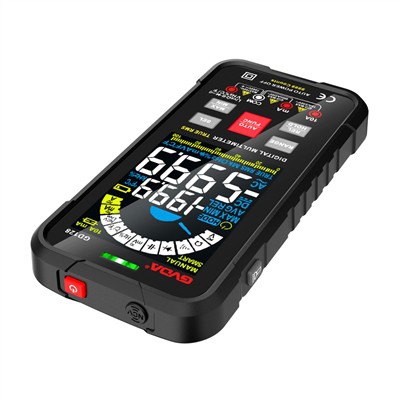
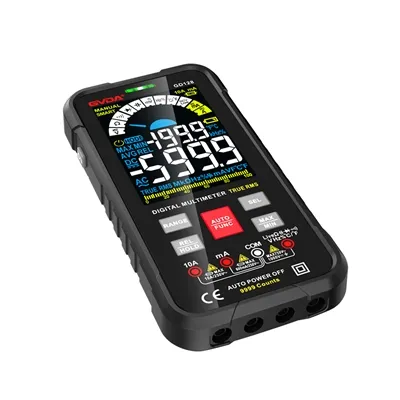
Coating thickness gauge principle and application methods
Coating Thickness Gauges Also known as cladding thickness gauges, the principle is as follows:
Magnetic thickness principle: when the probe and the cladding contact, Hall found that this potential difference UH and current strength IH is proportional to the probe and the magnetic metal substrate constitutes a closed magnetic circuit, due to the presence of non-magnetic covering layer, so that the magnetic circuit reluctance changes, and the magnetic induction strength B is proportional to the probe and the cladding contact, the metal substrate produces eddy currents, and the thickness of the sheet d is inversely proportional to the thickness of the sheet. The thickness of the cover layer can be calculated by measuring its change.
Eddy current thickness principle: the use of high-frequency alternating current in the coil to generate an electromagnetic field, magnetic thickness measurement method is used to non-destructively measure the thickness of non-magnetic coverings on the magnetic metal, and now there is a new type of coating thickness gauge, that is, the coating thickness gauge, which adopts the latest magnetic induction technology. This is known as the Hall effect, discovered by Hall in 1879. The eddy current method allows non-destructive measurement of the thickness of non-conductive layers on a ferrous metal substrate. Through the study of Hall voltage and the relationship between the operating current, the measurement of electromagnet magnetic taste permeability, the study of Hall voltage and the relationship between the magnetic field, coating thickness gauge is also known as the coating thickness gauge, film gauge, coating layer meter It is the use of magnetic thickness measurement and eddy current method of measuring the thickness of the principle. Coating thickness gauges generally have the following five types of methods according to the measurement principle: 1.
1. Magnetic Thickness Gauge: It is suitable for measuring the thickness of non-conducting layers on magnetically conductive materials. Magnetically conductive materials are generally: steel \\ Iron \\ Silver \\ Nickel. This method of measurement of high precision
2. Eddy current thickness measurement method: applicable to conductive metal on the non-conductive layer thickness measurement.
3. ultrasonic thickness measurement method: at present there is no such method to measure the thickness of coated layer, individual manufacturers abroad have such instruments, applicable to multi-layer thickness measurement of coated layer or the above two methods are unable to measure the occasion. But generally expensive, such as 200-type ultrasonic coating thickness gauge dedicated to measuring the coating on non-metallic substrates.
4. Electrolytic thickness measurement method: this method is different from the above three, does not belong to non-destructive testing, need to destroy the coating layer. General accuracy is not high. Measure up than other kinds of trouble
5. Radiation thickness gauge: the price of this instrument is very expensive (generally more than 100,000RMB), for some special occasions.