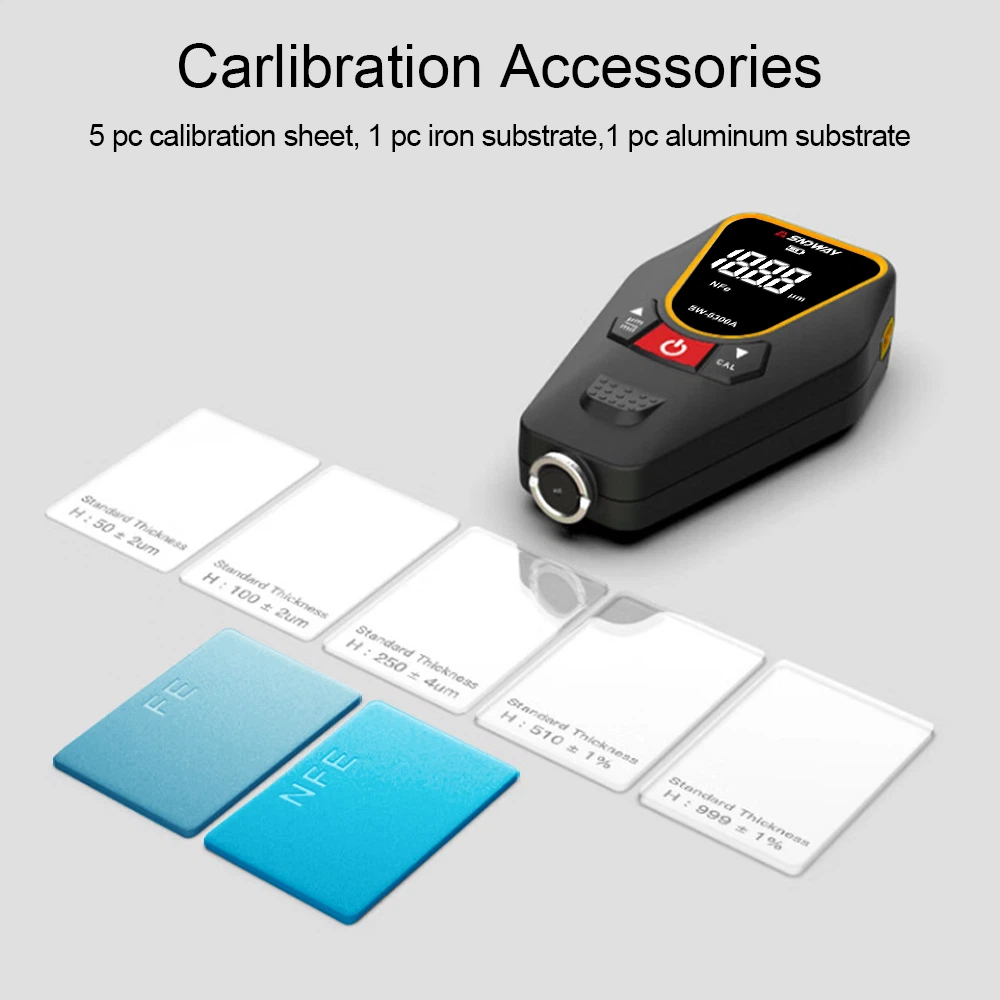
Coating Thickness Gauge Purchase Tips
The purchase of a coating thickness gauge is mainly selected through the following steps:
Step 1: Determine that the data to be measured is the thickness of the coating on the workpiece;
The second step: confirm that the base material of the measured workpiece is metal;
Step 3: Determine what kind of metal the workpiece substrate is:
1. Take a magnet close to the workpiece, and the one that can absorb is magnetic metal (such as iron, etc.);
2. Non-magnetic metals (such as aluminum, copper, etc.) that cannot be absorbed;
Step 4: Confirm the coating:
1. Non-metallic coating (such as paint, powder, etc.);
2. Non-magnetic metal coating (such as galvanized, tinned, etc.);
The fifth step: choose and buy the instrument:
1. Requirements for American L170 coating thickness gauge:
① Substrate: Magnetic metal substrate (such as iron, etc.)
② Coating:
1. Non-metallic coating (such as paint, powder, etc.);
2. Non-magnetic metal coating (such as galvanized, tinned, etc.);
2. Requirements for American LEE eddy current thickness gauge L180 thickness gauge:
① Substrate: non-magnetic metal substrate (such as aluminum, copper, zinc, etc.)
② Coating: 1. Non-metallic coating (such as paint, powder, etc.);
3. Requirements for American LEE dual-function coating thickness gauge L200 thickness gauge:
① Substrate: 1. Magnetic metal substrate (such as iron, steel, etc.)
2. Non-magnetic metal substrates (such as aluminum, copper, zinc, etc.)
② Coating: 1. Non-metallic coating (such as paint, powder, etc.);
2. Non-magnetic metal coating (such as galvanized, tinned, etc.);
Summary: For non-metallic coatings (such as paint, oxide film, etc.) and non-magnetic metals (such as: aluminum, copper, etc.) on magnetic metals (such as: iron, steel, etc.) ; For non-metallic coatings (such as paint, oxide film, etc.) material.