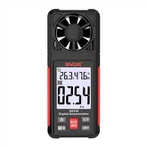
Fault 1. Low concentration gas cannot be detected
solutions:
1. Check whether the air pump of the gas detector is working normally, block the air inlet with your fingers for 5 seconds, if you feel obvious suction normally, if there is no suction, check whether the air inlet is blocked;
2. Pass nitrogen to calibrate the zero point or calibrate the zero point in clean air, and test after calibration;
3. If the gas to be measured cannot be detected after the zero point calibration, it is necessary to restore the factory settings of the gas detector;
4. The above steps can not be detected. It is necessary to confirm whether there is a gas to be tested on site, or the concentration of the gas to be tested is really low. If it is lower than the small detection accuracy of the gas sensor, it cannot be detected.
Fault 2. In the air, there is no gas to be measured, but the value fluctuates greatly or jumps around
solutions:
1. The short-term zero fluctuation range is less than 1% of the large range, which is the normal range. In the absence of the measured gas, the long-term drift is less than 2% of the large range. It is within the normal range. Gas, or the temperature and humidity in the air fluctuate greatly, resulting in unstable values;
2. Confirm whether the zero-point calibration or target-point calibration operation of the gas detector is performed. If the zero-point calibration operation is performed in the case of the measured gas, the gas with low concentration may not be detected. The calibration of the target point has been performed, but the calibrated concentration value does not match the actual concentration value, which may cause the gas detector value to fluctuate greatly or the detected value to be too small. These two situations can be solved by restoring to the factory;
4. If the problem cannot be solved, it is necessary to confirm whether the gas detector has been introduced with high concentration gas or has impacted the gas sensor. If the gas sensor has been impacted, turn on the gas detector and run it for 24 hours. If the value is not stable, the gas sensor may be damaged by impact, and the gas sensor needs to be replaced
Fault 3. Inaccurate detection
solutions:
1. Confirm whether the gas concentration on site is accurate, and the difference between the theoretical value and the actual value is large, and the gas detector is calibrated by passing in standard gas to ensure the detection accuracy, or send it to a third-party measurement agency for verification and calibration;
2. If the gas sensor is used for a long time, there may be errors in the measured value. It is necessary to confirm with the manufacturer whether the gas sensor can continue to be used. If the sensor itself is approaching its service life, it can be normal in a short time even after re-calibration. It is used, but the measured value of the gas detector will drift and the detection is inaccurate. It is recommended to replace the gas sensor.
Fault 4. When the value is 0 or the alarm value is not reached in the air, it will also alarm
solutions:
1. Check whether the various alarm value parameters of the gas detector have been modified;
2. Check whether the alarm mode and alarm mode of the gas detector have been modified;