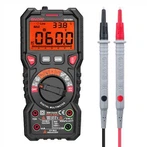
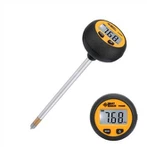
Comparison between gas detector and gas analyzer
Functionally:
Gas detector is an instrument tool for detecting gas leakage concentration. It belongs to safety protection instruments
A gas analyzer is a process analysis instrument used to measure gas composition. It is an instrument used to detect gas composition
In principle:
In principle, gas sensors are used for measurement, which is basically consistent
Application scenarios:
Gas detectors are widely used for on-site detection in various places such as petrochemicals, coal, metallurgy, chemical industry, municipal gas, environmental monitoring, etc. Can meet the measurement needs of special occasions; It can detect gas concentration or leakage in tunnels, pipelines, tanks, enclosed spaces, etc.
Gas analyzer
We need to provide pure nitrogen gas to clean the chamber of the instrument and reduce noise to ensure maximum stability of the instrument.
The headspace gas analysis instrument is used to determine the oxygen and carbon dioxide gas content and mixing ratio inside sealed packaging bags, bottles, cans, and other packaging materials; Suitable for quickly and accurately evaluating the gas component content and proportion inside packaging in production lines, warehouses, laboratories, and other occasions, in order to guide production and ensure the achievement of product shelf life.
Maintenance and upkeep
Reason 1: There may be combustible gases present in the sample gas. Zirconia solid electrolyte operates at high temperatures ranging from 600 to 850 degrees Celsius. If there are flammable components such as hydrocarbons in the sample gas, combustion reactions will occur and oxygen will be consumed, resulting in low instrument readings.
Processing method: Sampling inspection of the sample gas. If there is indeed combustible gas present in the sample gas, the operating conditions should be adjusted to remove the combustible gas, or a purifier should be installed in the sample gas to remove the combustible gas components.
Reason 2: The clogged probe filter and increased air resistance affect the diffusion rate of oxygen molecules in the measured gas.
Solution: Reverse blow and clean the filter. If it cannot be unblocked, replace the filter.
Reason 3: The furnace temperature is too high.
Solution: Check and calibrate the furnace temperature.
Reason 4: The range potential is too high.
Solution: Use the given potential difference to correct the range potential.