Concept and classification of rangefinders
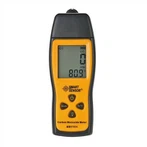
A rangefinder is a type of trajectory estimation instrument used to measure target distance, shake the table/oscillator, and perform trajectory estimation. There are many forms of rangefinders, usually a long cylindrical device consisting of an objective lens, an eyepiece, and a ranging knob, used to measure the distance of a target.
Ultrasonic rangefinder
Ultrasonic rangefinder measures the characteristics of ultrasonic waves reflected back from obstacles. The ultrasonic transmitter emits ultrasonic waves in a certain direction and starts timing at the same time. The ultrasonic waves propagate in the air and immediately return when encountering obstacles. The ultrasonic receiver immediately interrupts timing upon receiving reflected waves. By continuously detecting the echo reflected by obstacles after wave emission, the time difference T between transmitting ultrasonic waves and receiving echoes is measured, and then the distance L is calculated.
Ultrasonic rangefinder, due to the significant influence of the surrounding environment on ultrasonic waves, generally has a relatively short measurement distance and low measurement accuracy. At present, the scope of use is not very broad, but the price is relatively low, usually around a few hundred yuan.
Infrared rangefinder
An instrument that uses modulated infrared light for precise distance measurement, with a range generally of 1-5 kilometers. The principle of non diffusion in infrared propagation is utilized: because the refractive index of infrared is very small when it passes through other substances, long-distance rangefinders will consider infrared radiation, and the propagation of infrared radiation takes time. When infrared radiation is emitted from the rangefinder and encounters a reflector, it is reflected back and received by the rangefinder, and then the distance can be calculated based on the time it takes for infrared radiation to be emitted and received, as well as the propagation speed of infrared radiation
The advantages of infrared ranging are cheap, easy to implement, and safe, but the disadvantages are low accuracy, short distance, and poor directionality.