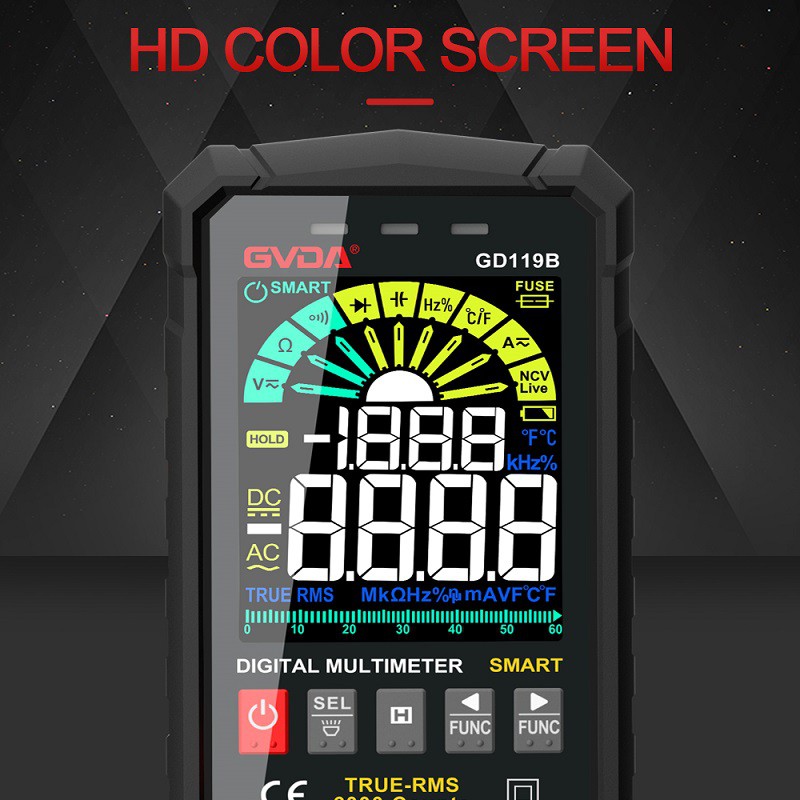
Contents of measurement range and measurement rate of digital multimeter
Measuring range
In a multi-function digital multimeter, different functions have corresponding maximum and minimum values that can be measured.
Measurement rate
The number of times a digital multimeter measures the amount of electricity being measured per second is called the measurement rate, and its unit is "times/s". It mainly depends on the conversion rate of the A/D converter. Some handheld digital multimeters use the measurement cycle to express the speed of measurement. The time required to complete a measurement process is called the measurement cycle.
There is a conflict between measurement rate and accuracy indicators. Usually, the higher the accuracy, the lower the measurement rate. It is difficult to balance the two. To solve this contradiction, you can set different display digits on the same multimeter or set the measurement speed switch: add a fast measurement file, which is used for A/D converters with faster measurement rates; significantly reduce the display digits by reducing the number of display digits. To increase the measurement rate, this method is relatively common and can meet the needs of different users for measurement rate.
Why can’t multimeters measure high-frequency AC signals?
Inside the multimeter, in the AC measurement range, some impure resistive components are involved, such as the pointer coil of the pointer meter, the DC isolation capacitor of the digital meter, etc. The impedance is related to the frequency and waveform of the alternating current. Therefore, the calibration of the multimeter is based on alternating current with a certain frequency and waveform as the standard. If you use it to measure alternating current with other frequencies and waveforms, the readings will be inaccurate.