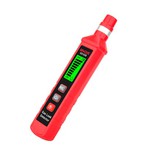
The difference between a carbon monoxide gas detector and a combustible gas detector
There are significant differences between a carbon monoxide gas detector and a combustible gas detector, and many dealers and users often confuse the two. In fact, the difference between them is very large. If, by mistake, a combustible gas detector is installed in a situation where a carbon monoxide gas detector is required, or vice versa, it will cause huge losses to people's lives and properties.
A carbon monoxide gas detector is used to detect carbon monoxide gas (CO). It cannot be used to detect alkanes gases such as methane (CH4).
Combustible gas detectors on the market can generally be used to detect natural gas, liquefied petroleum gas, or coal gas, etc. City pipeline gases are usually one of these three types of gases. The main components of these gases are alkanes gases like methane (CH4), and they are mainly characterized by having a pungent odor. When the concentration of these combustible gases in the air exceeds a certain standard, it can lead to an explosion. A combustible gas detector is designed for these explosive alkanes gases and cannot be used to detect carbon monoxide gas.
City pipeline coal gas is a special type of gas that contains both CO and alkanes gases. So, if you just want to check whether the pipeline coal gas is leaking, you can use either a carbon monoxide gas detector or a combustible gas detector. However, if you want to check whether excessive carbon monoxide gas is generated when natural gas, liquefied petroleum gas, or coal gas in city pipelines is burning, a carbon monoxide gas detector is needed. In addition, when using a coal stove for heating or burning coal, the gas produced is carbon monoxide gas (CO), not alkanes gases like methane (CH4). Therefore, you should use a carbon monoxide gas detector instead of a combustible gas detector. If a combustible gas detector is installed in a situation where a coal stove is used for heating or coal is burned, it is completely useless. Even if someone is poisoned, the combustible gas detector will not go off. This is extremely dangerous.
In short, if you want to detect toxic gas and are concerned about the possibility of poisoning, you must choose a handheld or fixed carbon monoxide gas detector from Hunan Guorui. If you want to detect combustible gas and are concerned about whether the pipeline is leaking, you can generally use a handheld or fixed combustible gas detector from Hunan Guorui. Hunan Guorui uses the principle of catalytic combustion to measure the concentrations of various combustible gases. It has functions such as infrared remote control, as well as audible and visual alarms, and is widely used in petrochemical, metallurgical, mining, fire protection, gas, power and telecommunications, urban water supply, sewage treatment, scientific research, education, and national defense industries.