Determining the polarity of a diode with a multimeter
Generally, the positive and negative poles of diodes are directly marked. The section of the diode shell with a white ring is the negative pole. Or the shorter lead is the negative pole. But what if a diode doesn't have these markings?
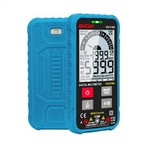
A multimeter is a tool commonly used by electricians. When using the ohm range (for measuring resistance) of a multimeter to measure the resistance of the positive and negative poles of a diode, since there is a battery inside the multimeter, note that the black probe is connected to the terminal marked "-" on the multimeter case, and the red probe is connected to the terminal marked "+". The current flows out from the red probe and back through the black probe. Additionally, the Rx1000 ohm range should be selected for measurement. The Rx1 range has too large a current, and the Rx10K range has too high a voltage, both of which can easily damage the diode, so they are not suitable for use.
The specific testing method is shown in the figure on the right. Connect the two probes of the multimeter to the two leads of the diode respectively. The forward resistance of a diode is very small, generally ranging from tens of ohms to a few hundred ohms, while the reverse resistance is very large, usually between tens of kilohms and several hundred kilohms. If in the two tests shown in the figure, the test on the right shows a smaller resistance and the test on the left shows a larger resistance, it can be determined that the lead connected to the red probe on the right is the positive pole of the diode, and the other lead is the negative pole.
Some modern digital multimeters may have a diode - testing range (continuity range). When setting the multimeter to this range for measurement, if there is a reading, the end of the red probe is the positive pole. If there is no reading or "1" is displayed, the black probe is the positive pole.
Judging the Quality of a Diode
The method of using the resistance range of a multimeter described above is still used for judgment. If the difference between the measured forward and reverse resistances is significant, it indicates that the diode has good unidirectional conductivity. If the two measured resistance values are both very small or both very large, it means that the diode has lost its unidirectional conductivity and is a defective diode with quality problems.