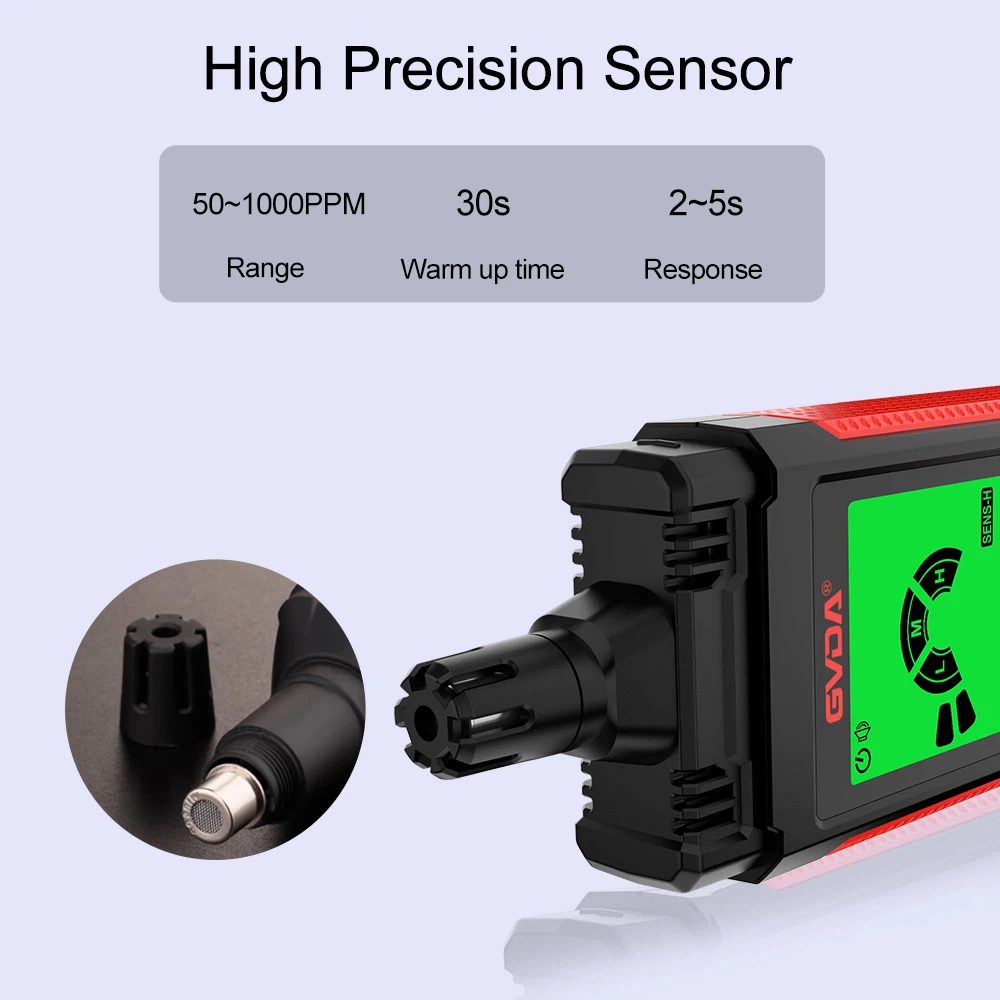
Today's flammable gas detectors have the advantages of stability, easy identification, convenience, reliability and applicability. The following is a detailed introduction to the advantages of flammable gas detectors.
1. Stability; this is a factor that must be considered. The smaller the value of zero offset and full amplitude offset, the better. All gas detectors will produce more or less interference reactions except for other gases other than oxygen. What happens is an electrochemical sensor that detects hydrogen sulfide, so as daily users in our home life, we must be familiar with the toxic gases that may exist in our homes.
2. Ease of identification; numerical or pointer type gas detector. Generally speaking, the numerical type has the advantages of easy readability and less misjudgment. Whether the display area is large enough, with background lighting and large fonts, for easy reading and understanding. Whether the siren is loud enough to distinguish it from background noise. Generally, it is applicable to the effect above 90dB(A). Whether the warning flashing light can be recognized from various angles. Whether the signal can be continuously displayed with the change of the measured gas concentration, and the alarm will be stopped after confirmation or countermeasures are taken.
3. Convenience; now we are all working outside. Convenience is also a factor that has to be heavy on the premise of stability: light weight, small size, easy and comfortable wearing, and easy maintenance. Whether the sensor uses smart sensor technology.
4. Reliability: The longer the life of the sensor, the better. Generally speaking, the average life of a combustible gas detector is 2-5 years, and the smaller the error value, the better. The accuracy and its precision will increase with the increase of the service life, and the warranty period of the product is generally 2 years.
5. Applicability: The professionals of the property should identify and evaluate the on-site harmful gas in the limited space where the family is located to determine whether the installed sensor of the toxic gas detector meets the needs of use.