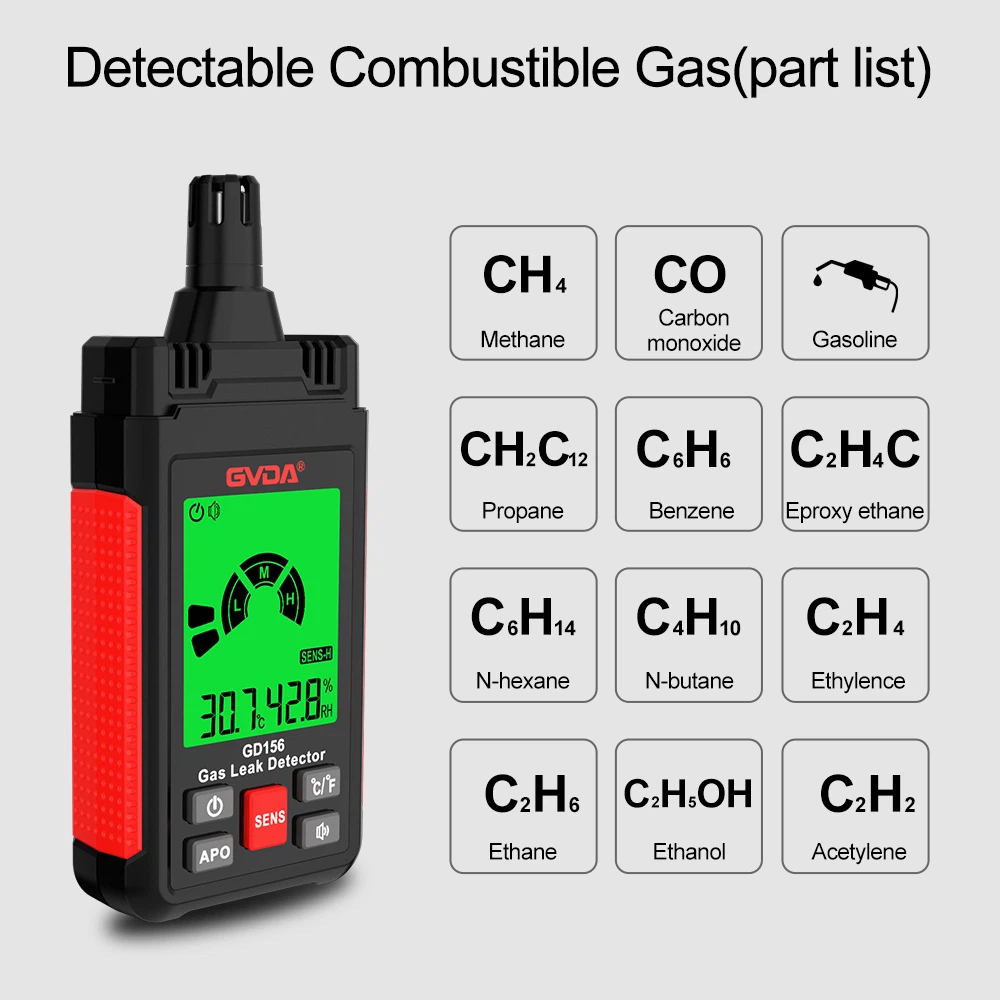
Does industrial boiler water require gas detectors?
1, Testing cycle of industrial steam boilers
The detection cycle of industrial steam boilers needs to be flexibly adjusted according to the evaporation capacity and operating mode:
For boilers with an evaporation rate greater than 4t/h and continuous operation, due to high equipment operating intensity, fast water replenishment frequency, and rapid fluctuations in gas composition in water quality, key indicators such as hardness, alkalinity, pH value, and chloride ions are usually detected every 8 hours using a gas detector. Combined with gas data (such as dissolved oxygen concentration), the amount of water treatment agent added or deoxygenation process should be adjusted in a timely manner;
Boilers with an evaporation rate of less than or equal to 4t/h or intermittent operation have relatively gentle changes in water quality and can be tested once a day. However, during the start-up and shutdown stages of the boiler, sudden changes in water temperature and pressure can lead to abnormal gas solubility. Therefore, it is necessary to increase the frequency of testing and focus on monitoring changes in dissolved oxygen to prevent "cold corrosion" during start-up.
If the boiler is equipped with automatic water softening equipment and the water quality stability is good during long-term operation (with no significant fluctuations in the test data for one month), the testing period can be appropriately extended, but the longest should not exceed 3 days. In addition, regardless of the size of the equipment, a comprehensive water quality analysis must be conducted once a month, using gas detectors to deeply detect indicators such as dissolved oxygen and iron content, to ensure that the water quality remains stable and safe in the long run.
2, Inspection cycle of dual-purpose steam water boiler
The dual-purpose boiler for steam and water not only needs to produce steam to meet production needs, but also supply hot water, with stricter requirements for water purity and gas content. If the gas in the water exceeds the standard, it will not only corrode the boiler body, but may also affect the steam quality, leading to corrosion of the hot water system.
Under normal operating conditions, it is recommended to use a gas detector to detect hardness, pH value, and dissolved solids every 6-8 hours, while simultaneously monitoring dissolved oxygen concentration to ensure that gas content is controlled within safety standards;
If the boiler is used frequently (such as running for more than 12 hours a day), or if the water quality of the water source is unstable (such as the increase in oxygen content in the raw water during the rainy season), resulting in significant fluctuations in water quality, the detection interval should be shortened to once every 4-6 hours to avoid problems caused by excessive gas composition.
A comprehensive water quality test must also be conducted once a month, using gas detectors to comprehensively investigate indicators such as corrosion products and microbial content, in order to prevent the formation of dirt inside the boiler due to gas corrosion or blockage of pipelines due to microbial growth. Once abnormal situations occur in the boiler, such as frequent fluctuations in steam pressure, fluctuating water temperature, and alarms from the water quality processor, the number of inspections should be increased immediately, every 2-4 hours, until the problem is resolved to ensure that the equipment resumes operation in a safe state.