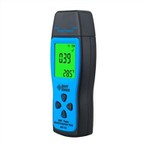
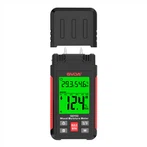
Explaining the Signal Processing Function of the Infrared Thermometer
Infrared thermometer signal processing function explanation: Signal processing function: Different from measuring discrete processes (such as part production) and continuous processes, infrared thermometers are required to have signal processing functions (such as peak holding, valley holding, and average). When measuring the temperature of glass on a conveyor belt, peak holding is required, and the temperature output signal is transmitted to the controller.
Infrared temperature measurement technology is playing an important role in product quality control and monitoring, online fault diagnosis of equipment, * * protection, and energy conservation. In the past two decades, non-contact infrared thermometers have developed rapidly in technology, with continuously improving performance and expanding applicability, and their market share has been increasing year by year. Compared to contact based temperature measurement methods, infrared temperature measurement has the advantages of fast response time, non-contact, long use and service life.
The selection of infrared thermometers can be divided into three aspects: performance indicators, such as temperature range, spot size, working wavelength, measurement accuracy, response time, etc; In terms of environment and working conditions, such as ambient temperature, windows, display and output, protective accessories, etc; Other factors such as ease of use, maintenance and calibration performance, and price also have a certain impact on the choice of thermometer. With the continuous development of technology, the optimal design and new progress of infrared thermometers provide users with various functions and multi-purpose instruments, expanding their choices.
Explanation of signal processing function of infrared thermometer to determine temperature measurement range: Temperature measurement range is an important performance indicator of thermometer. Each model of thermometer has its own specific temperature measurement range. Therefore, the user's measured temperature range must be considered accurately and comprehensively, neither too narrow nor too wide. According to the blackbody radiation law, the change in radiation energy caused by temperature in the short band of the spectrum will exceed the change in radiation energy caused by emissivity error. Therefore, short waves should be used as much as possible for temperature measurement.
Determining target size: Infrared thermometers can be divided into monochrome thermometers and two-color thermometers (radiation colorimetric thermometers) based on their principles. For monochrome thermometers, the area of the measured target should fill the thermometer's field of view during temperature measurement. It is recommended that the size of the target being tested exceed 50% of the field of view size. If the target size is smaller than the field of view, the background radiation energy will enter the visual and acoustic symbols of the thermometer and interfere with the temperature reading, causing errors. On the contrary, if the target is larger than the field of view of the thermometer, the thermometer will not be affected by the background outside the measurement area.
Explanation of signal processing function of infrared thermometer determines optical resolution (distance sensitivity). Optical resolution is determined by the ratio of D to S, which is the ratio of the distance D between the thermometer and the target to the diameter S of the measurement spot. If the thermometer must be installed far away from the target due to environmental conditions and needs to measure small targets, a high optical resolution thermometer should be selected. The higher the optical resolution, i.e. increasing the D: S ratio, the higher the cost of the thermometer.