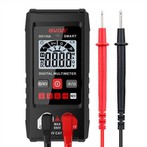
Explanation of the reasons for the measurement error of the anemometer
The anemometer is still a relatively common device, but we often encounter some measurement errors during operation. Why does this situation occur? I believe many people may have this question. Today, the editor will explain to everyone that most of the reasons for measurement errors in anemometers are as follows
1、 Installation error
Due to the fact that the anemometer is an on-site instrument, the environmental conditions during use differ significantly from those in the laboratory. According to the working principle of the instrument, before calibration, the rotation axis of the wind speed sensor and the coupling device of the wind speed sensor need to be connected with a hose, and the rotation axis of the sensor must be strictly concentric with the rotation axis of the instrument. If there is eccentricity between the upper, lower, left, and right after installation, the rotation torque of the coupling device cannot be fully transmitted to the rotation axis of the wind speed sensor, which can easily cause inflexibility in rotation and bring errors to the measurement results. Therefore, it is necessary to repeatedly adjust its concentricity during installation, and then start calibration work after adjustment.
2、 Errors caused by unstable wind speed
Due to the principle of the circuit, if the data displayed on the anemometer display screen is still unstable, recording the data will bring errors to the measurement results. To overcome the impact of this error, it is necessary to adjust the wind speed value and wait for the data displayed on the calibrator display screen to stabilize before recording, with a stabilization time of no less than 2 minutes.
3、 Errors caused by calibration parameters
There are different wind speed equations for the same wind speed sensor, resulting in different calibration parameters. To calibrate different models of wind speed sensors using a single standard, parameter corrections must be made to different wind speed sensors. When performing calibration, attention should be paid to using the dial of the anemometer to input relevant calibration parameters, and check whether the calibration parameter corresponds to the correct display value of the calibrator. If the display value is correct, calibration work can only be carried out, otherwise measurement errors may occur.