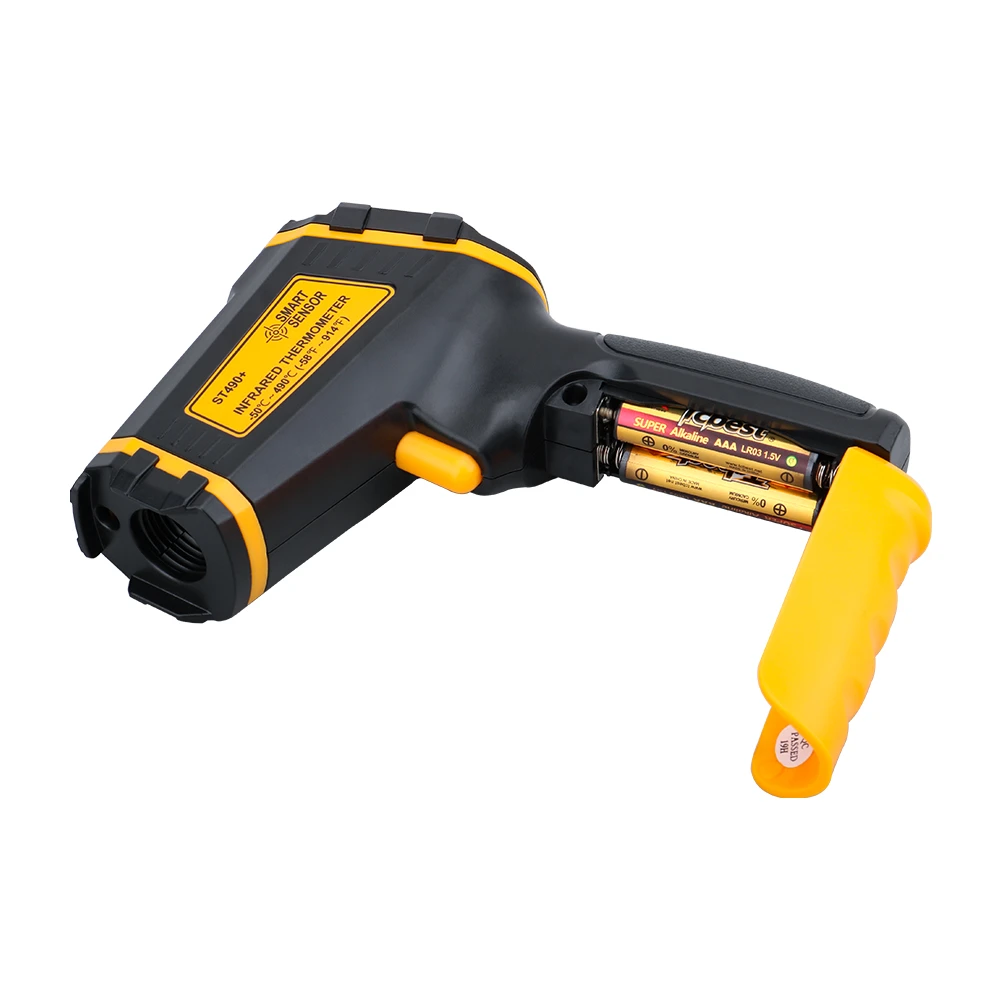
Factors Affecting Accuracy of Infrared Thermometers
Infrared thermometers are widely used, from various industries to our daily lives. Many people may be familiar with this infrared thermometer and have doubts about its operation or issues. Therefore, the following six points will help you understand the factors that affect measurement accuracy: 1. Measurement angle. To ensure accurate measurement, the instrument should measure along the normal direction of the surface of the object being measured (perpendicular to the surface of the target being measured) as much as possible. If it cannot be guaranteed to be in the normal direction, measurements should also be taken within a 45 ° angle to the normal direction, otherwise the instrument display value will be lower.
2. The environmental temperature should be strictly in accordance with the instrument's technical specifications when using the instrument. Beyond this range, the measurement error of the instrument will increase, and even damage it. When the ambient temperature is high, air cooling, water cooling devices or thermal protection sleeves can be used. Thermal protection sleeves can enable the instrument to function normally in environments up to 200 ℃. When a handheld thermometer is used in an environment with a large temperature difference from another environment, it will temporarily reduce the accuracy of the instrument. To obtain ideal measurement results, the instrument should be placed at the work site for a period of time (recommended at least 30 minutes) to reach equilibrium between the instrument temperature and the ambient temperature before use.
3. Air quality: Smoke, dust, and other pollutants in the air, as well as unclean lenses, can prevent the instrument from receiving sufficient infrared energy to meet measurement accuracy, resulting in increased measurement errors. Therefore, the lens can be kept clean regularly, and an air blower helps prevent the lens from being contaminated.
4. Electromagnetic interference instruments should be kept as far away as possible from potential sources of electrical interference, such as electric equipment with large load changes. Use shielded wires for the output and input connections of online instruments and ensure that the shielded wires are well grounded. In strong interference environments, using external protective conduits, rigid conduits are better than flexible conduits. Do not introduce the AC power of other devices into the same conduit.
5. When there are other high-temperature objects, light sources, or solar radiation around the measured target, these radiations will directly or indirectly enter the measurement path, causing measurement errors. In order to overcome the impact of environmental radiation, the first step is to avoid direct entry of environmental radiation into the optical path. The measured target should be filled with the instrument's field of view as much as possible. For indirect interference from environmental radiation, occlusion can be used to eliminate it.
6. The field of view and target size should ensure that the target enters the instrument's measurement field of view. The smaller the target, the closer it should be. In actual measurement, in order to reduce errors, it is possible to make the size of the target more than twice the size of the field of view spot.