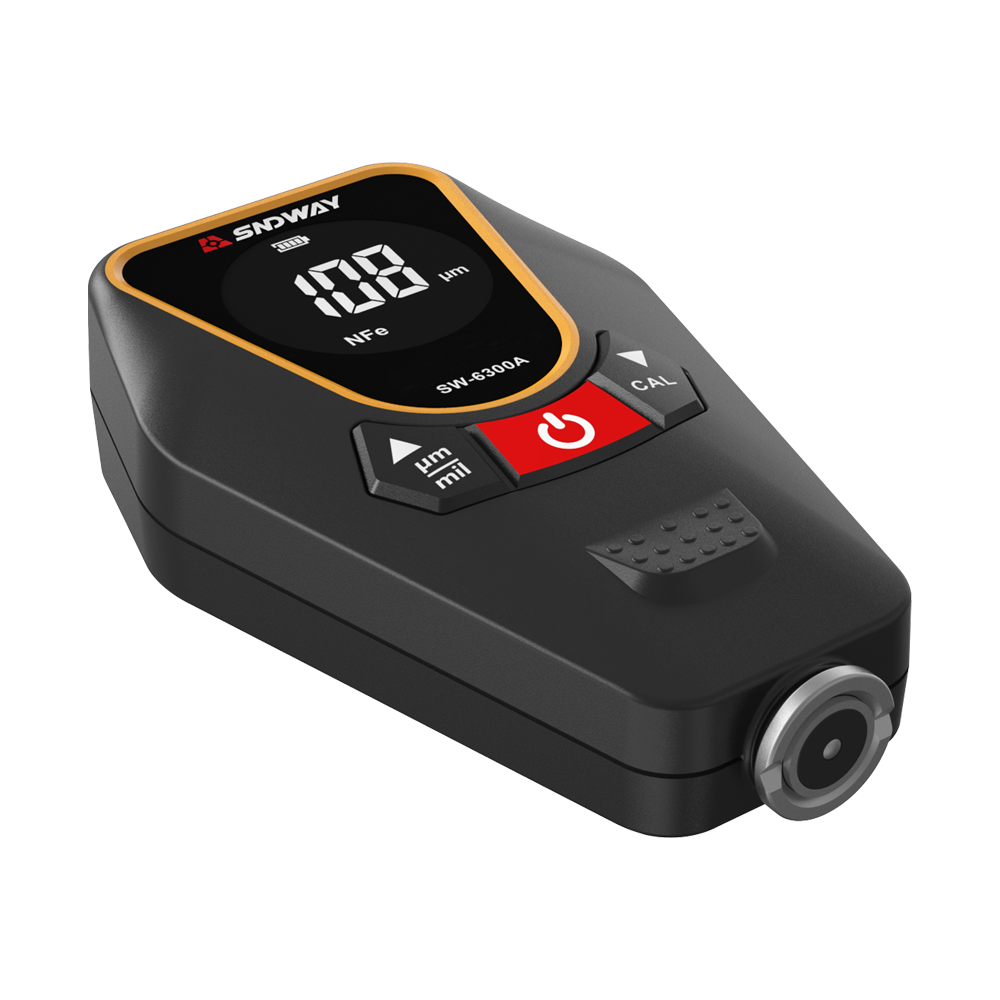
Factors and Solutions of Coating Thickness Gauge Affecting Measured Values
Using a thickness gauge is the same as using other instruments. It is necessary to master the performance of the instrument and understand the test conditions. The coating thickness gauge using the magnetic principle and the eddy current principle measure the coating thickness based on the electrical and magnetic properties of the measured substrate and the distance from the probe. Therefore, the electromagnetic physical characteristics and physical dimensions of the measured substrate will affect Magnetic flux and eddy current magnitude. That is to say, it affects the reliability of the measured value. The following will introduce the problems in this respect.
1. Boundary spacing
If the distance between the probe and the boundary of the measured body, holes, cavities, and other cross-section changes is smaller than the specified boundary distance, measurement errors will result due to insufficient cross-sections of magnetic flux or eddy current carriers. If it is necessary to measure the coating thickness at this point, it can only be measured by pre-calibration on the uncoated surface under the same conditions. (Note: The latest products have the unique function of calibrating through the cladding, which can reach an accuracy of 3-10%)
2. Substrate surface curvature
An initial value is calibrated on a flat comparison sample, and then subtracted from this initial value after measuring the coating thickness. Or refer to the next article.
3. Minimum thickness of base metal
The base metal must have a given minimum thickness, so that the electromagnetic field of the probe can be completely contained in the base metal. The minimum thickness is related to the performance of the measuring instrument and the properties of the metal base. It is just above this thickness that the measurement can be performed without the need for measurement. value correction. For the influence caused by the insufficient thickness of the substrate, measures can be taken to eliminate it by sticking a piece of the same material under the substrate. If it is difficult to make a decision, or the base material cannot be added, the difference from the rated value can be determined by comparing it with a sample of known coating thickness. And consider this point in the measurement and make corresponding corrections to the measured values or refer to Article 2 for corrections. And those instruments that can be calibrated can get accurate direct-reading thickness values by adjusting the knob or button.
On the contrary, the influence of too small thickness can be used to develop a thickness gauge that directly measures the thickness of copper foil, as mentioned above.
4. Surface roughness and surface cleanliness
Several measurements must be taken to obtain a representative average measurement on rough surfaces. Obviously, the rougher the substrate or coating, the less reliable the measured value. In order to obtain reliable data, the average roughness Ra of the substrate should be less than 5% of the coating thickness. As for surface impurities, they should be removed. Some instruments have upper and lower limits to eliminate those "flying spots".
5. The probe measures the force of the plate
The force applied by the probe should be constant. and should be as small as possible. Only then will the soft coating not be deformed, so that the measured value will drop. If necessary, a hard, non-conductive, hard film with a certain thickness can be laid between the two. In this way, the remanence can be properly obtained by subtracting the film thickness.
6. External constant magnetic field, electromagnetic field and matrix residual magnetism
Measurements near interfering external magnetic fields should be avoided. The remaining residual magnetism may cause more or less measurement errors according to the performance of the detector, but such phenomena as structural steel and deep-drawn steel plate generally do not appear.
7. Ferromagnetic and conductive components in cladding materials
When there are certain ferromagnetic components in the coating, such as certain pigments, it will affect the measured value. In this case, the coating of the comparison sample used for calibration should have the same electromagnetic force as the coating of the measured object. characteristic, used after calibration. The method used may be to apply the same coating on the aluminum or copper plate sample, and obtain a comparative standard sample after the eddy current test. It can also be purchased from the relevant measurement and testing department.