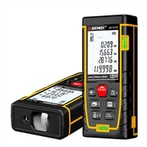
Factors to consider when buying a sound level meter
Factors to consider when purchasing a sound level meter:
Price: When purchasing a sound level meter, you first need to consider the product price range. The price of a sound level meter depends on many factors, including functionality, accuracy level, number of channels, storage capacity, and more. Generally speaking, domestically produced sound level meters with the same indicators are much cheaper than imported ones.
Function: For sound level meters, the measurement function is the most important indicator. It not only determines the application scope of the sound level meter, but also has the greatest relationship with the price of the sound level meter. According to the type of signal being measured, for steady-state noise signals, the function of the sound level meter is only to measure the instantaneous sound pressure level; for the measurement of unsteady-state signals, it is generally required to measure the time-averaged sound level or equivalent sound level; for measurements that require For spectrum analysis, you need to choose a noise spectrum analyzer.
Number of channels: A general sound level meter has only one channel and only measures the sound pressure level of one channel. Sometimes it is necessary to measure multi-channel sound pressure levels, so multi-channels are needed. For example, measuring sound intensity level requires 2 channels, and measuring sound power level requires more channels. Multi-channel sound level meters greatly expand the use of sound level meters.
Accuracy Level: Sound Level Meter Accuracy Level: Level 1 and Level 2.
Spectrum analysis function: In order to perform spectrum analysis on noise, you need to select the spectrum analysis function. The most commonly used in acoustic measurements are octave and 1/3 octave spectrum analysis. In the past, spectrum analysis was implemented using analog filters, but now most of them use digital technology to perform real-time spectrum analysis through digital filters.
Measuring range: The measuring range of the sound level meter sometimes needs to consider its upper limit of measurement in order to measure high sound pressure levels, such as 140dB, or even above 160dB; sometimes it needs to consider its lower limit of measurement in order to measure low sound pressure levels, such as below 20dB. ;Usually the measurement range of sound level meters is in the range of 25dB to 130dB.
Interface: Current sound level meters generally include RS232, USB and other interfaces for connecting to micro printers or computers. Users can choose according to testing needs.
Calibration: During use of the sound level meter, a sound calibrator is required for sound calibration. The sound calibrator is often used as a supporting instrument for the sound level meter and becomes an integral part of the sound level meter. There are two types of sound calibrators: piston sounders and sound level calibrators. The piston sounder produces 250Hz, 124dB sound pressure level, with an accuracy level of 1 or 0; the sound level calibrator produces 1000Hz, 94dB sound pressure level, with accuracy Level is Level 2 or Level 1. A Class 1 sound level meter needs to be calibrated with a Class 1 or Class 0 sound calibrator, and a Class 2 sound level meter needs to be calibrated with a Class 2 or Class 1 sound calibrator.