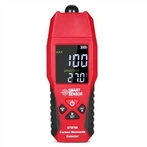
Fault Analysis and Countermeasures for Combustible Gas Detectors During User Operation
The causes of malfunctions in the use of combustible gas detectors by users are very complex, mainly due to users' lack of understanding of detector performance, improper equipment selection, improper use by users, failure to construct in accordance with regulatory requirements, and insufficient maintenance. The following mainly analyzes the causes of malfunctions in the use of combustible gas detectors by users, and proposes how to correctly use combustible gas detectors to minimize the occurrence of malfunctions.
Improper use by the user
During the use of the detector, the user should install the air conditioner and heating equipment near the combustible gas detector. If the cold and warm air flows directly through the combustible gas alarm during the use of the air conditioner and heating equipment, it may cause errors in the resistance of the platinum wire of the combustible gas alarm. Therefore, the combustible gas alarm should be kept away from the air conditioner and heating equipment to avoid faults caused by improper placement.
Users should also pay attention to preventing electromagnetic interference when using combustible gas detectors. The installation position, installation angle, protective measures, and system wiring of combustible gas alarms should be designed to prevent electromagnetic interference. There are three main ways in which the electromagnetic environment affects combustible gas detectors: airborne electromagnetic wave interference, narrow pulse groups on power and other input/output lines, and human static electricity. For example, when a combustible gas alarm is installed near an air conditioner, it will cause a deviation in the system's detection; The distance between the detection line and strong electrical lines such as power lines and lighting lines is small, and without anti electromagnetic interference measures, the system will also produce detection deviation. Users should pay attention to factors that may cause malfunctions during the use of combustible gas detectors, such as dust, high temperature, humidity, rain, etc. When installing a combustible gas alarm in a location that requires the installation of an exhaust fan, if the exhaust fan is placed adjacent to the combustible gas detector, the leaked combustible gas will not be able to fully diffuse to the vicinity of the combustible gas alarm, resulting in the inability to detect in a timely manner and causing a missed opportunity.
In addition, users should also pay attention to the setting of combustible gas detectors in explosion-proof places. For example, Class A factories that emit combustible gases should use explosion-proof combustible gas alarms, and their explosion-proof level should not be lower than the corresponding explosion-proof level requirements of current regulations. Users should also pay attention to avoiding places with high temperature, high humidity, steam, and oil fumes when using combustible gas detectors. Do not place or hang items on the detector. The installed combustible gas detector cannot be moved arbitrarily. Users should choose products with replaceable sensor probes when using combustible gas alarms for ease of use.