Fault Analysis of Combustible Gas Detectors from the Perspective of Operating Principles
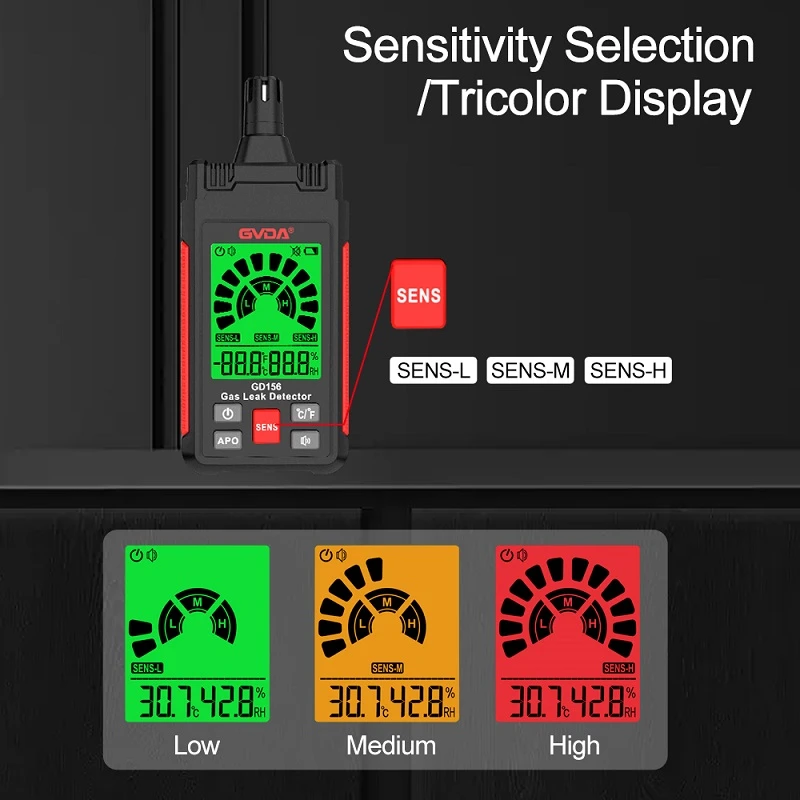
①Combustible gas detectors are installed and applied in industrial and civil buildings to respond to the concentration of single or multiple
combustible gases. The two most commonly used types in daily applications are catalytic combustion type and semiconductor type combustible gas detectors. Semiconductor combustible gas detectors are mainly adopted in restaurants, hotels, domestic kitchens and other places using coal gas, natural gas and liquefied petroleum gas. Catalytic combustion combustible gas detectors are widely deployed in industrial sites where combustible gases and vapors are released.
②The catalytic combustion combustible gas detector measures combustible gas concentration by detecting the resistance change of heated refractory platinum wire. When combustible gas enters the detector, an oxidation reaction (flameless combustion) occurs on the surface of the platinum wire. The generated heat raises the temperature of the platinum wire and changes its resistivity. Similarly, high ambient temperature will also alter the platinum wire's temperature and resistivity, leading to deviations in measured readings.
③The semiconductor combustible gas detector determines gas concentration based on the surface resistance variation of semiconductor materials. It adopts highly sensitive gas-sensitive semiconductor components. During operation, the resistance of the semiconductor drops upon contact with combustible gas, and the magnitude of resistance reduction corresponds proportionally to the gas concentration.
④A combustible gas detector consists of a measurement module and an alarm module with respective independent functions. Working principle of the measurement module: The sensor inside forms a Wheatstone bridge with the detection element, fixed resistors and zero-adjustment potentiometer. The bridge uses platinum wire as the carrier of the catalytic element. After power-on, the platinum wire heats up to its operating temperature, and ambient air reaches the element surface via natural diffusion or forced sampling. When no combustible gas exists in the air, the bridge outputs zero voltage. Once combustible gas diffuses onto the detection element, flameless catalytic combustion takes place, elevating the element temperature and increasing platinum wire resistance. This unbalances the bridge and outputs a voltage signal proportional to the gas concentration. The signal is amplified, converted from analog to digital, and finally displayed on the liquid crystal screen as the gas concentration value.
Working principle of the alarm module: When the measured combustible gas concentration exceeds the threshold, the amplified bridge output voltage is compared with the preset reference voltage through a voltage comparator. A square wave generator then outputs pulse signals to drive the audible and visual alarm circuit: the buzzer emits continuous alarm tones and the LED flashes to trigger the alert.
It can be concluded from the above principles that several factors will cause detector faults:
Electromagnetic interference distorts detection signals and results in measurement errors;
Collision or vibration may break internal circuits and cause detection failure;
Excessively humid environment or water ingress inside the device can lead to short circuits or changes in circuit resistance, resulting in abnormal detection performance.