Feasibility Analysis of Measuring Woven Fabric Density Using Electron Microscope
At present, GB/T 4668-1995 "Determination of Density of Woven Fabrics" is generally used to measure the density of woven fabrics. This standard specifies three methods: fabric decomposition method, fabric analysis mirror method and mobile fabric density mirror method. At present, my country's textile industry The third method is commonly used. These three methods are all directly measured by human eyes, which is labor-intensive, has high error rate, and low efficiency, and it is difficult to accurately measure the density of complex fabrics and high-density fabrics.
test part
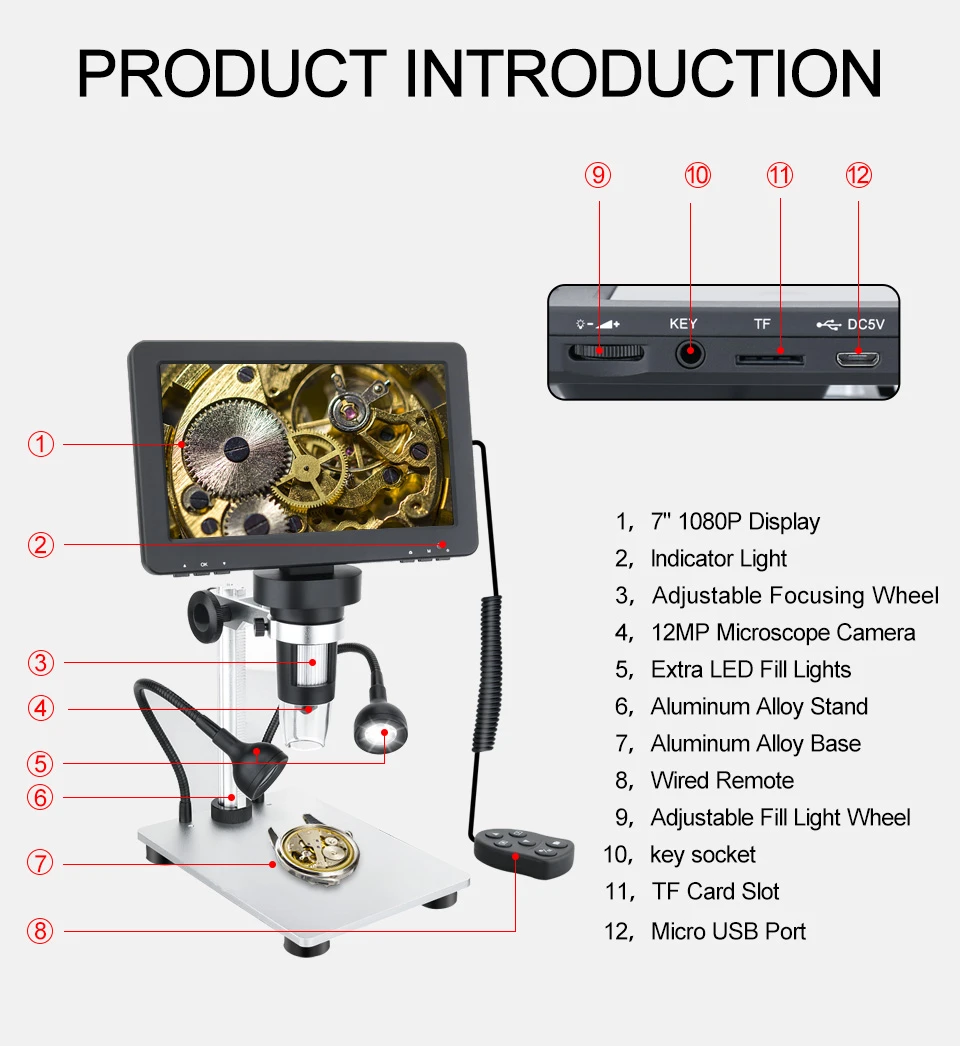
Principle: Use an electron microscope to magnify the fabric to 20-100 times, and directly count the number of yarns per unit length on the display screen. Equipment: 20~100 times electron microscope, measuring range 5cm accuracy, 0.5mm ruler, mobile stage. 2.1 Cut a 10cm×10cm sample from the flat part of the fabric at least 15cm away from the selvedge. When cutting the sample, try to cut along the warp and weft of the fabric, and mark the warp and weft, and remove about 1cm of the warp and weft. yarn.
Place the sample and the ruler together on the movable stage under the microscope (the sample is on the bottom and the ruler is on the top), adjust the sample so that the warp direction of the sample is as consistent as possible with the moving direction of the stage, and adjust the appropriate position of the microscope. Multiplier and focal length until the image is displayed clearly.
By slowly moving the stage, count the number of yarns within 5cm on the display screen, multiply by 2 to get the weft density of the fabric.
Reset the stage, rotate the fabric so that the weft direction is consistent with the moving direction of the stage, and count the number of yarns within 5cm on the display screen by slowly moving the stage, multiplying by 2 is the warp density of the fabric.
analysis Summary
Determining the density of woven fabrics by electron microscopy has the following advantages:
High precision. Due to the large magnification, each yarn of the fabric and each scale of the ruler can be clearly distinguished, so the number of yarns within 5cm can be accurately counted.
efficient. Because the number of yarns is directly counted on the liquid crystal display, compared with the mobile fabric density mirror, the work intensity is small, the eye fatigue is relatively small, and the measurement can be carried out continuously, so the efficiency is high.
Through examples, we can see that the image of electron microscope is clear. Different fabrics can clearly see each yarn through different magnifications. The number of yarns is counted accurately and efficiently, and the error of test results is small.