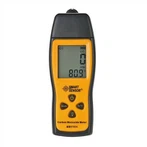
Five classifications of coating thickness gauges
1. Magnetic thickness measurement method: It is suitable for measuring the thickness of the non-magnetic layer on the magnetic material. Magnetic materials are generally: steel, iron, silver, nickel. This method has high measurement accuracy. the
2. Eddy current thickness measurement method: suitable for measuring the thickness of non-conductive layers on conductive metals. This method is less accurate than the magnetic thickness measurement method.
3. Ultrasonic thickness measurement method: At present, there is no such method to measure the coating thickness. Some foreign manufacturers have such instruments, which are suitable for the measurement of multi-layer coating thickness or the occasions where the above two methods cannot be measured. But generally expensive, measurement accuracy is not high.
4. Electrolytic thickness measurement method: This method is different from the above three methods. It does not belong to non-destructive testing. It needs to destroy the coating, and the general accuracy is not high. It is more troublesome to measure than other kinds.
5. Radiographic thickness measurement: The instrument here is very expensive (generally above 100,000 RMB), and it is suitable for some special occasions. the
The most commonly used methods in China are the first and second methods. 1. Magnetic thickness measurement method: It is suitable for measuring the thickness of the non-magnetic layer on the magnetic material. Magnetic materials are generally: steel, iron, silver, nickel. This method has high measurement accuracy.
Magnetic Thickness Gauge
The magnetic thickness gauge has an integrated instrument structure and can be operated with one hand. It adopts the principle of electromagnetic induction and is suitable for measuring the thickness of non-magnetic coatings on various magnetic metal substrates. It can measure the thickness of various coatings on steel (except nickel plating), coatings, enamel, plastics, etc. It can also be used for Measure the thickness of various metal foils (such as copper foil, aluminum foil, gold foil, etc.) and non-metallic films (such as paper, plastic, etc.). This instrument can be used for production inspection, acceptance inspection and quality supervision inspection. In line with national standards.
Eddy Current Thickness Gauge
The eddy current thickness gauge is a small instrument, using the principle of eddy current measurement, it can conveniently and non-destructively measure the paint, plastic, rubber and other coatings on the non-ferrous metal substrate, or the thickness of anodized film on the aluminum substrate. The instrument is widely used in machinery, automobile, shipbuilding, petroleum, chemical industry, electroplating, plastic spraying, enamel, plastic and other industries.
Eddy current measurement principle
The high-frequency AC signal generates an electromagnetic field in the probe coil, and when the probe is close to the conductor, eddy currents are formed in it. The closer the probe is to the conductive substrate, the greater the eddy current and the greater the reflection impedance. This amount of feedback characterizes the distance between the probe and the conductive substrate, that is, the thickness of the non-conductive coating on the conductive substrate. Since these probes specialize in measuring the thickness of coatings on non-ferromagnetic metal substrates, they are often referred to as non-magnetic probes. Non-magnetic probes use high-frequency materials as coil cores, such as platinum-nickel alloys or other new materials. Compared with the principle of magnetic induction, the main difference is that the probe is different, the frequency of the signal is different, the size and scale relationship of the signal are different. Like the magnetic induction thickness gauge, the eddy current thickness gauge has also reached a high level of resolution of 0.1um, allowable error of 1%, and range of 10mm. The thickness gauge using the principle of eddy current can in principle measure the non-conductive coating on all electrical conductors, such as the surface of aerospace vehicles, vehicles, household appliances, aluminum alloy doors and windows and other aluminum products surface paint, plastic coating and Anodized film. The cladding material has a certain conductivity, which can also be measured by calibration, but the ratio of the two conductivity is required to be at least 3-5 times different (such as chrome plating on copper). Although steel substrates are also electrical conductors, magnetic principles are more suitable for this type of task.