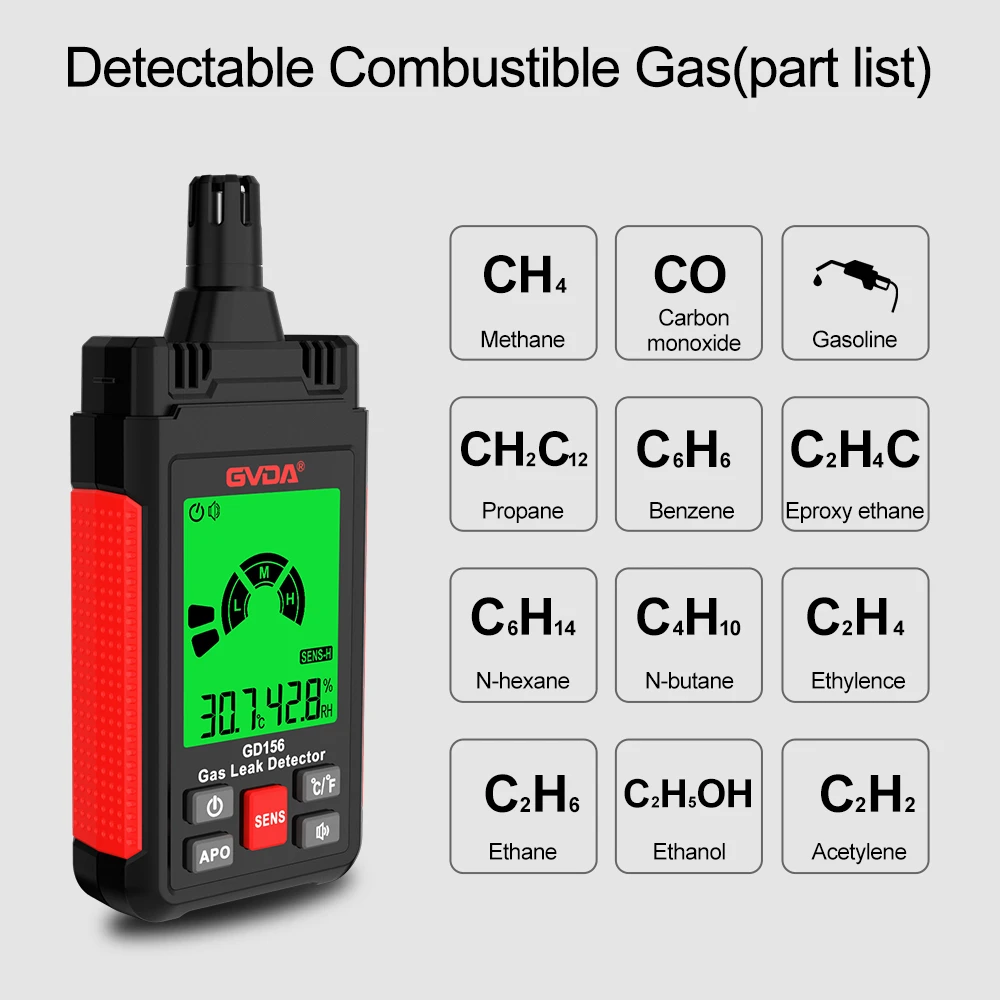
Gas sensors can be divided into three major categories based on their working principles.
A) Gas sensors utilizing physicochemical properties: semiconductor type (surface-controlled, bulk-controlled, surface potential-controlled), catalytic combustion type, solid-state thermal conductivity type, etc.
B) Gas sensors utilizing physical properties: thermal conductivity type, optical interference type, infrared absorption type, etc.
C) Gas sensors utilizing electrochemical properties: potentiostatic electrolysis type, galvanic cell type, diaphragm ion electrode type, solid electrolyte type, etc.
Toxic and harmful gases are classified into two major categories according to their hazards: flammable gases and toxic gases. Due to their different properties and risks, different detection methods are adopted.
Flammable gases are the most common hazardous gases in petrochemical and other industrial sites, mainly including organic gases such as alkanes and certain inorganic gases like carbon monoxide. Three essential conditions must be met for a flammable gas explosion: flammable gas reaching a certain concentration, sufficient oxygen, and an ignition source with adequate heat. These are the three elements of explosion, none of which can be missing. In other words, the absence of any single condition will prevent fire and explosion. When flammable gases (vapors, dust) mix with oxygen and reach a specific concentration range, an explosion will occur upon contact with an ignition source of sufficient temperature. The concentration range at which flammable gases explode when exposed to an ignition source is defined as the explosive concentration limit, shortened to explosion limit, usually expressed in volume percentage (%). In fact, the mixture only explodes within a specific concentration window. No explosion will happen if the gas concentration is below the LEL (Lower Explosive Limit, insufficient flammable gas) or above the UEL (Upper Explosive Limit, insufficient oxygen). The LEL and UEL values vary for different flammable gases (refer to Issue 8 for details), which requires special attention during instrument calibration. For safety purposes, alarms are generally triggered at 10% LEL and 20% LEL. The 10% LEL threshold is set as the warning alarm, while 20% LEL serves as the danger alarm. This is why flammable gas detectors are also commonly referred to as LEL detectors.