How does a multimeter work?
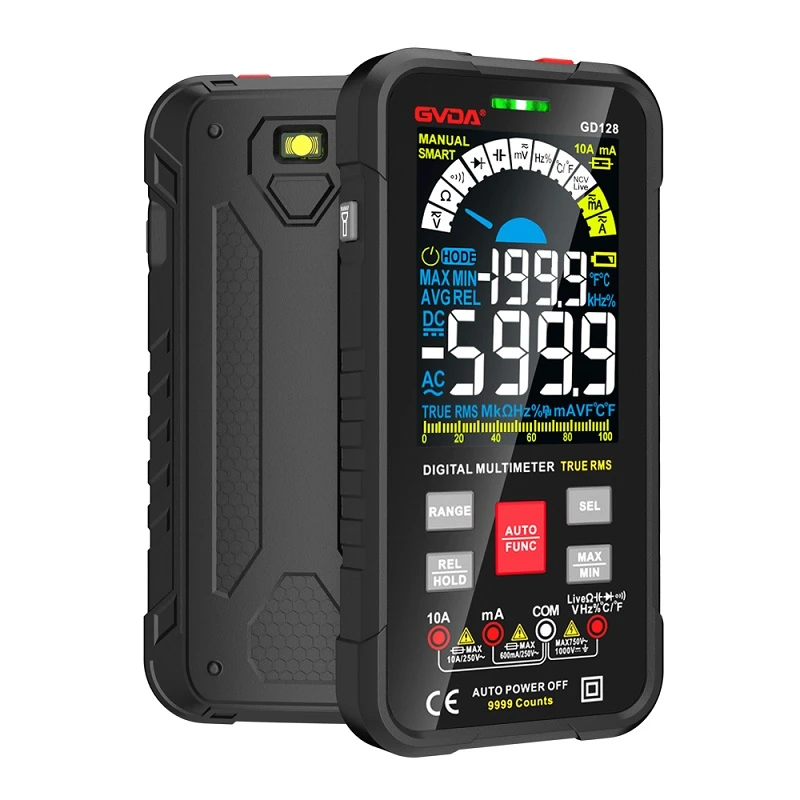
"Multimeter" is the abbreviation of multimeter, which is an indispensable tool in our electronic production. Multimeters can measure current, voltage, resistance, and some can also measure the amplification of a transistor, frequency, capacitance, logic potential, decibel value, etc. There are many types of multimeters, the most popular ones nowadays are mechanical pointer type and digital multimeter. They each have their own advantages and disadvantages; for electronic beginners, it is recommended to use an analog multimeter, because it is very helpful for us to familiarize ourselves with some electronic knowledge principles. The following mainly introduces the measurement principle of mechanical pointer multimeter.
The basic principle of this type of multimeter is to use a sensitive magnetoelectric DC ammeter (microampere) as the meter head. When a small current passes through the meter, there will be a current indication. However, the meter head cannot pass large current, so some resistors must be connected in parallel or series with the meter head to shunt or reduce the voltage, so as to measure the current, voltage and resistance in the circuit.
1. Principle of measuring DC current.
By connecting an appropriate resistor (called a shunt resistor) in parallel with the meter to shunt the current, the current range can be expanded. Changing the resistance of the shunt resistor can change the current measurement range.
2. Principle of measuring DC voltage.
By connecting an appropriate resistor (called a multiplier resistor) in series with the meter to reduce the voltage, the voltage range can be expanded. Changing the resistance of the multiplier resistor can change the voltage measurement range.
3. Principle of measuring AC voltage.
Because the meter is a DC meter, when measuring AC, it is necessary to install a parallel or series half-wave rectifier circuit to rectify the AC into DC and then pass it through the meter, so that the AC voltage can be measured according to the magnitude of the DC. The method of extending the AC voltage range is similar to the DC voltage range.
4. Principle of measuring resistance.
Connect appropriate resistors in parallel and series to the meter head, and connect a battery in series at the same time, so that the current passes through the resistance being measured. According to the size of the current, the resistance value can be measured. Changing the resistance of the shunt resistor can change the range of the resistance.