How does the illuminance meter check?
The random measurement errors during the calibration process of the illuminance meter mainly include external light interference, changes in temperature and humidity, voltage fluctuations of the stabilized DC power supply, vibrations during the movement of the standard lamp, and personnel readings.
Some of these random measurement errors are inevitable, which requires measures to be taken to minimize the impact of errors as much as possible.
The calibration environment of the illuminance meter should be in a constant temperature and humidity darkroom to reduce the influence of external light, temperature and humidity. The illuminance meter should be installed on a stable workbench (there should be no strong magnetic field around to prevent electromagnetic interference);
The indoor temperature should be maintained at (20 ± 5) ℃ (the drift of the photovoltaic cell changes with temperature).
The indoor environment should be dry with a humidity of less than 85% RH. Due to the influence of humidity on the calibration meter;
For this reason, it is required that the light probe of the illuminance meter has good sealing performance. For illuminance meters that are not used for a long time, it is best to power them on at regular intervals.
In order to reduce the impact of vibration caused by the movement of the standard lamp, a light rail and a pulley are selected, and they are slowly slid during the measurement process to minimize the influence of vibration.
The issue of personnel readings requires calibration personnel to have considerable knowledge and proficient operational skills in illuminance meter calibration, and to be responsible and conscientious during the illuminance meter calibration process.
The specific operation steps of an illuminance meter, also known as a lux meter, are specialized instruments for measuring luminosity and brightness.
It is the measurement of light intensity (illuminance), which is the degree to which an object is illuminated, that is, the ratio of the luminous flux obtained on the surface of the object to the illuminated area.
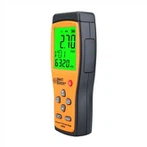
An illuminance meter is usually composed of a selenium or silicon photovoltaic cell and a microampere meter.