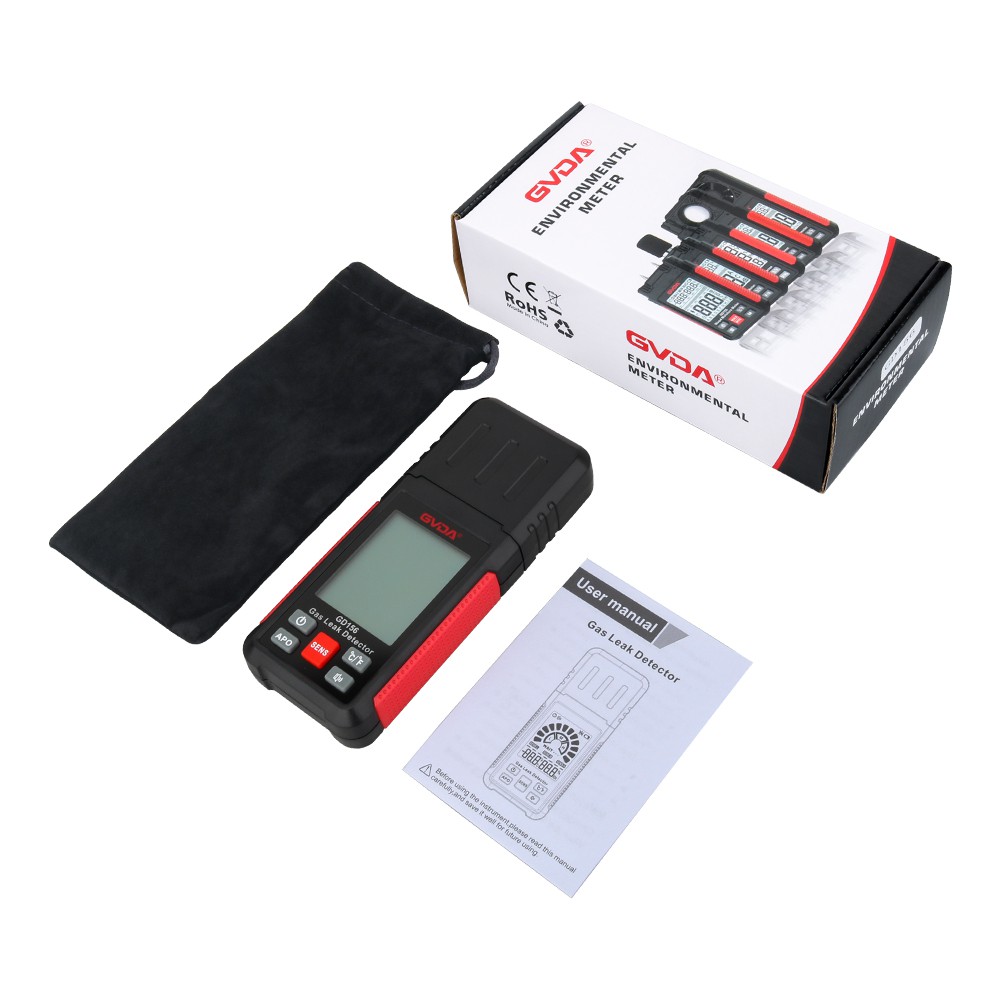
How much do you know about gas detection sensors
A gas sensor is a converter that converts a certain gas volume fraction into a corresponding electrical signal. The probe head conditions the gas sample through the gas sensor, usually including filtering out impurities and interfering gases, drying or cooling the display part of the instrument.
A gas sensor is a device that converts information such as gas composition and concentration into information that can be used by personnel, instruments, computers, etc.! Gas sensors are generally classified as chemical sensors, although this classification is not necessarily scientific.
In some petroleum, chemical, coal and other industries, various flammable and explosive gases or liquids may often leak during production, processing and transportation. For these leaked gases, we need to monitor them in real time. At this time It is inseparable from the application of gas detectors. The gas detector is inseparable from the sensor. Different sensors have different functions. Next, we will introduce 6 sensors.
PID photoionization gas sensor
PID is composed of ultraviolet light source and ion chamber and other main parts. There are positive and negative electrodes in the ion chamber to form an electric field. Under the irradiation of ultraviolet lamp, the gas to be measured is ionized to generate positive and negative ions, and a current is formed between the electrodes. Signal. PID has the advantages of high sensitivity, no poisoning problem, safety and reliability.
Galvani battery oxygen sensor
Diaphragm Galvani battery-type oxygen sensor structure: on one side of the plastic container, a 10-30μm thick polytetrafluoroethylene gas-permeable membrane with good oxygen permeability is installed, and precious metals (platinum, gold, Silver, etc.) negative electrode, and form an anode (lead, cadmium, etc., with a high ionization tendency metal) on the other side of the container or the empty part of the container.
Potassium hydroxide is used, when oxygen passes through the electrolyte, a redox reaction occurs at the cathode and anode, which ionizes the anode metal and releases electrons. The magnitude of the current is proportional to the amount of oxygen. Since the anode metal is consumed during the entire reaction, the sensor needs Replace regularly. At present, domestic technology has matured day by day, and it is completely possible to localize such sensors.
catalytic combustion sensor
The principle of catalytic combustion sensor is one of the most widely used principles for detecting combustible gases at present. It has the characteristics of good output signal linearity, reliable index, cheap price, and no cross-interference with other non-combustible gases.
The catalytic combustion sensor adopts the principle of Wheatstone bridge, and the sensing resistor and the combustible gas in the environment undergo flameless combustion, so that the temperature changes the resistance value of the sensing resistor, breaks the balance of the bridge, and makes it output a stable current signal. Amplification, stabilization and processing in post circuits ultimately reveal reliable values.
Constant potential electrolytic gas sensor
The constant potential electrolytic sensor is currently the most widely used technology for poison detection. In this respect, foreign technologies are leading, so most of these sensors rely on imports. The structure of the constant potential electrolytic gas sensor: in a cylindrical cell made of plastic, the working electrode, the counter electrode and the reference electrode are installed, the electrolyte is filled between the electrodes, and the diaphragm made of porous tetrafluoroethylene is placed in the Top package.
The connection between the preamplifier and the sensor electrodes applies a certain potential between the electrodes to make the sensor work. Oxidation or reduction reaction occurs between the gas and the working electrode in the electrolyte, reduction or oxidation reaction occurs at the counter electrode, and the equilibrium potential of the electrode changes, and the change value is proportional to the gas concentration.
Infrared sensor Infrared sensor
Utilizing the absorption principle of various elements on a specific wavelength, it has good anti-poisoning, sensitive response, and is responsive to most hydrocarbons. But the structure is complicated and the cost is high.
metal oxide semiconductor sensor
The metal oxide semiconductor sensor uses the adsorption of the measured gas to change the conductivity of the semiconductor, and activates the alarm circuit through the comparison of the current change. Since the measurement of the semiconductor sensor is greatly affected by the environment, the output line shape is unstable. Metal-oxide-semiconductor sensors, because of their very sensitive response, are currently widely used in the field of measuring micro-leakage of gases.
The operating environment of the gas detector is relatively harsh, surrounded by various polluting gases. The sensor is the core part of the gas detection transformer and the key to detecting the gas concentration. With different detection principles, the sensors are also different.