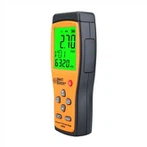
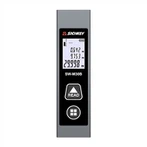
How much do you know about the different types of thickness gauges out there?
A thickness gauge is an instrument used to measure the thickness of a material or object, and is often used in many industries to measure the thickness of a product, either continuously or on a sample basis. In these gauges a variety of rays are used. The benefit of these rays is that there is no use of ultrasonic frequency changes in a wave thickness thermometer. For this type of equipment is more varied, different kinds of thickness gauges, the applications in life are more varied. Let's take a look at the different kinds of thickness gauges in life applications are?
Thickness gauge type one: laser thickness gauge. This instrument uses the principle of laser reflection, according to some technicians, this principle has a very close relationship with the principle of light reflection, in the optical principle with the qualitative analysis of micro-geometry. It is a non-contact dynamic measuring instrument. It can be directly on the digital signal output, can also be connected to the computer, can also be quickly processed data, but also the deviation value output to a variety of industrial equipment.
Thickness gauge type II: X-ray thickness gauge. This type of thickness gauge using the X-ray penetration of the object being measured, the intensity of the X-ray changes with the thickness of the material is to show certain characteristics. The main applications of this type of thickness gauge in the industry mainly include non-ferrous metal strip processing, as well as metallurgical industry strip processing. This thickness gauge belongs to a kind of non-contact dynamic measuring instrument, it uses the controller is PLC and industrial computer as the core.
Thickness gauge type three: ultrasonic thickness gauge. In our life there is a wave called ultrasonic, this instrument is made of ultrasonic waves, it uses the principle of reflection is the principle of ultrasonic reflection to carry out the thickness measurement, the probe will measure the signal to carry out a certain amount of emission, emission of the signal through the object will be reflected, reflected over the probe to carry out a certain amount of acceptance, acceptance of a certain amount of time difference according to the time difference after you can carry out a certain amount of calculation. After acceptance, it can be calculated according to the time difference.